
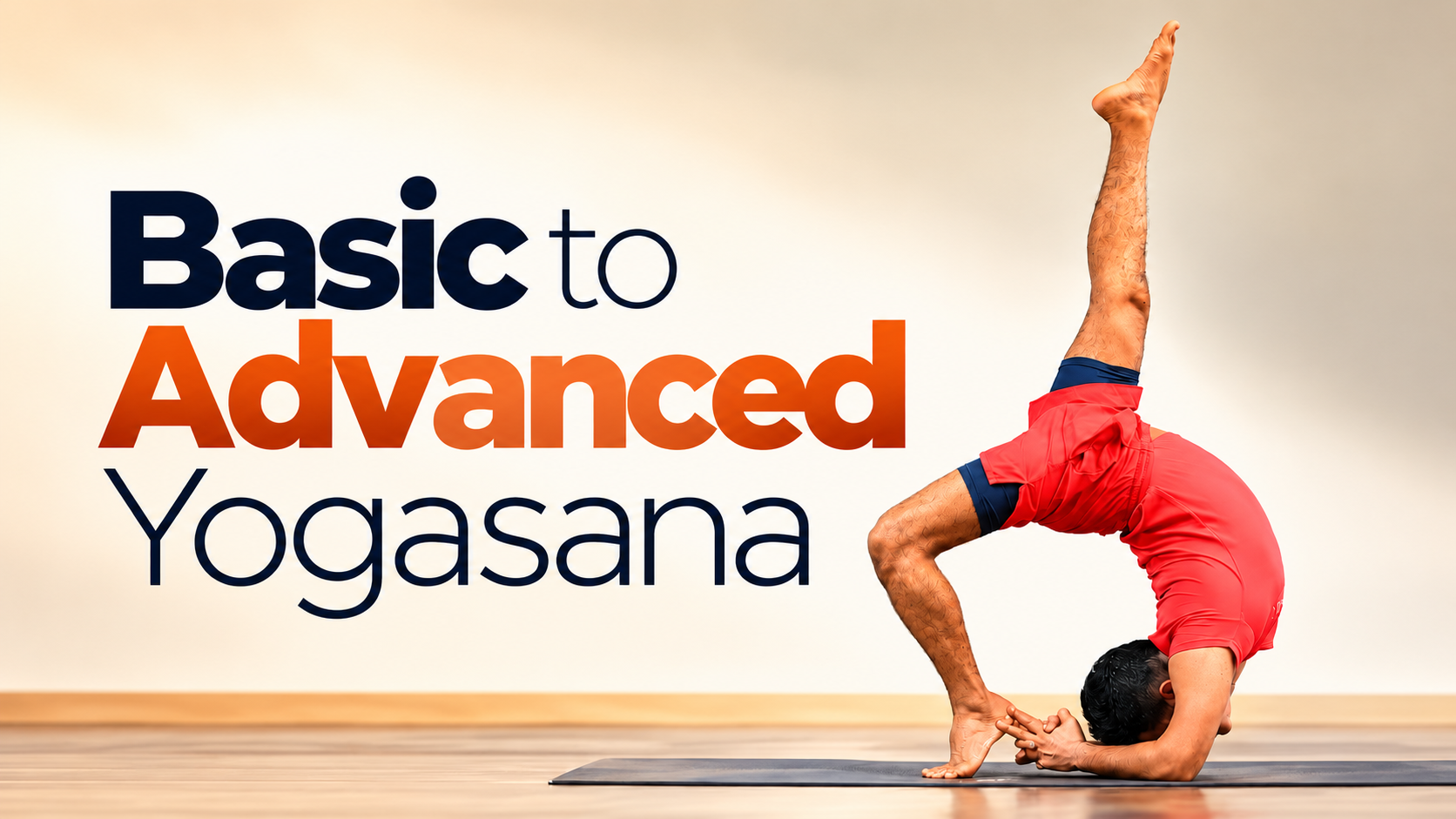
How to Progress Safely from Basic to Intermediate and Advanced Yoga Asanas
Seeing someone float into Crow Pose or hold a steady Headstand is inspiring. It is natural to want to try it too. But yoga is not a race, and moving to harder poses before your body is ready is a common reason people get hurt.
The good news is that almost anyone can progress safely with the right steps. At Unika Yoga & Therapy, we believe yoga is more than poses, and we guide students of every level to grow at their own pace. This guide shows you how to move from basic to intermediate and advanced asanas, one safe step at a time.
Why shouldn't you rush into advanced yoga poses?
Advanced poses ask for strength, flexibility, balance and control all at once. If one of these is missing, your joints take the load instead of your muscles. The wrists, neck, lower back, knees and shoulders are the areas most often strained.
Understanding how your body moves makes a big difference. Our simple guide to yoga biomechanics explains this in plain words.
When you progress slowly, you get:
- Fewer injuries and less soreness
- Steady breathing and a calmer mind in hard poses
- A strong base that makes advanced poses feel lighter
- A practice you can enjoy for many years
What are basic, intermediate and advanced yoga asanas?
| Level | What it builds | Example poses |
| Basic | Body awareness, balance and correct alignment | Mountain (Tadasana), Child’s Pose (Balasana), Cat-Cow, Downward Dog, Warrior I and II, Tree Pose |
| Intermediate | More strength, balance and flexibility | Boat (Navasana), Half Moon (Ardha Chandrasana), Camel (Ustrasana), Side Plank (Vasisthasana), Dolphin |
| Advanced | Deep strength, control and years of steady practice | Headstand (Sirsasana), Crow (Bakasana), Wheel (Chakrasana), Forearm Stand (Pincha Mayurasana), Full Splits (Hanumanasana) |
1. Basic (Body awareness, balance and correct alignment)
2. Intermediate (More strength, balance and flexibility)
3. Advanced (Deep strength, control and years of steady practice)
How do you know you are ready for the next level?
Ask yourself these five questions:
- Can I hold basic poses for 5 to 8 slow breaths without shaking or pain?
- Can I breathe calmly through my nose while I hold a pose?
- Do I know where my feet, knees, hips and spine should be?
- Do I feel steady in the pose, not forced or stressed?
- Are my joints free from sharp pain or pressure?
If you can say yes to most of these, you are likely ready. Try a slightly harder version of one pose, not a whole new level at once.
How can you progress from basic to advanced yoga step by step?
- Master the basics first. Practise regularly for at least 3 to 6 months. Focus on good alignment, not on how deep you can go.
- Build strength where you need it. A strong core, shoulders, wrists and legs protect your joints. Plank, Bridge and Chair Pose are great building blocks.
- Use preparation poses. Every advanced pose has easier poses that lead to it (see the table below).
- Use props. Blocks, straps, bolsters and a wall help you hold the right shape safely. They are tools, not a sign of weakness.
- Warm up every time. Never go into a deep pose with a cold body. Start with gentle stretches or Sun Salutations.
- Change one thing at a time. First hold the pose longer, then go a little deeper, then try the next variation.
- Learn advanced poses with a teacher. A trained eye can spot mistakes you cannot feel and offer the right modification.
| Goal pose | Build up with | What to strengthen or open |
| Crow Pose (Bakasana) | Garland Pose (Malasana), Plank, Crow with feet on a block | Wrists, arms and core |
| Headstand (Sirsasana) | Dolphin, Forearm Plank, headstand prep at a wall | Shoulders and core, to keep weight off the neck |
| Wheel Pose (Chakrasana) | Bridge, Cobra, Camel, Bow | Shoulders, chest and upper back |
| Full Splits (Hanumanasana) | Low Lunge, Half Splits, Pigeon | Hamstrings and hip flexors |
What common mistakes should you avoid?
- Copying poses from social media without guidance
- Holding your breath in hard poses
- Skipping the warm-up and cool-down
- Ignoring old injuries or pain
- Comparing your body with others in class
- Practising the same intense pose every day with no rest
Want to learn how good alignment feels in your own body? Our Yoga Alignment and Safe Adjustment Workshop covers this in depth.
What if you have an injury or health condition?
If you have back or neck pain, a knee or shoulder problem, high blood pressure or glaucoma, or you are pregnant, some advanced poses may not suit you. This is especially true for inversions and deep backbends. Check with your doctor first, then work with a qualified yoga therapist.
Our Personal Yoga Therapy sessions adapt each pose to your body. You can also read about yoga therapy for spinal health or safe prenatal yoga.
Keep learning with Unika
Ready to take your next step safely?
Whether you are learning the basics or working towards your first Headstand, you do not have to guess. Our teachers at Unika Yoga & Therapy guide you at your own pace, with no pressure and no competition.
- New to Unika? Try our Trial/Starter Pack: 5 classes for $80. Book a class now.
- Working on a dream pose? Book Personal Advanced Yoga with our founder, Dr. Kuldeep Kumar Kushwah (PhD Yoga).
- Managing an injury? Start with Personal Yoga Therapy.
Visit us at 180B Bencoolen Street, The Bencoolen, #08-01, Singapore 189648. Call or WhatsApp +65 8300 7895, or contact us online.
Frequently asked questions
It is different for everyone. Most people need 1 to 3 years of regular practice to reach advanced poses safely. Taking longer is perfectly fine.
Basic and intermediate poses are fine at home once you know the alignment. Learn advanced poses like Headstand or Wheel with a teacher first. Then practise near a wall with a soft, clear space around you.
Three to five times a week works well for most people. Keep at least one or two rest days so your muscles can recover.
No. Yoga builds flexibility over time. Strength, balance and control matter just as much.
? Many students start with Crow Pose. You stay close to the floor, and you can use a block under your feet for support.6. What should I do if a pose hurts?
A mild stretch is normal. Sharp pain, tingling or dizziness is not. Come out slowly, rest and try an easier version. If the pain continues, see a doctor or yoga therapist.
Yes, many people do. Progress a little more slowly, warm up well and practise with guidance. Some poses may not suit every body, and there is always a safe variation.