
Yoga Therapy vs Regular Yoga: What’s the Real Difference?
Regular yoga is a wellness practice that supports general fitness, flexibility, stress management, and overall wellbeing. Yoga Therapy is the individualised application of yoga practices to support people with specific health conditions and therapeutic goals.
That’s the core difference. Here’s what you need to know.
Regular Yoga
Group classes focusing on:
- Physical poses (asanas)
- Breathing techniques (pranayama)
- Meditation and mindfulness
- General health and wellbeing
Best for: Building strength, stress relief, general health, community.
Yoga Therapy
Yoga Therapy still uses traditional yoga practices including yoga postures (asanas), breathing techniques (pranayama), relaxation, meditation, and lifestyle guidance. These practices are carefully selected and adapted according to the individual’s condition, needs, and goals.
Personalised, one-on-one sessions designed to:
- Address specific health conditions
- Support recovery from injuries and chronic pain
- Manage mental health issues
- Help regulate the nervous system
Best for: Chronic pain, anxiety, depression, post-injury recovery, PTSD, specific rehabilitation.
Quick Comparison
| Aspect | Regular Yoga | Yoga Therapy |
| Format | Group classes | One-on-one sessions |
| Goal | General wellness | Address specific health conditions |
| Customization | Modifications offered | Entire practice designed for you |
| Training | 200-500 hours | Additional specialised training (often 300 hours or more) |
| Cost | Lower | One-to-one therapeutic sessions |
Why Yoga Therapy Works Differently
A yoga therapist understands how and why specific yoga practices may support different health conditions:
- Chronic pain? They use evidence-informed yoga practices to help regulate the nervous system and reduce pain sensitivity, rather than simply encouraging deeper stretching.
- Anxiety? They use breathing techniques, movement, and relaxation practices to support activation of the parasympathetic nervous system (the body’s rest-and-digest response).
- Injury recovery? They work within evidence-informed therapeutic principles and, when appropriate, alongside recommendations from healthcare professionals.
While many yoga teachers have valuable experience and additional training, a certified yoga therapist receives specialised education in adapting yoga practices for specific health conditions.
Who Needs Yoga Therapy?
Every yoga therapy programme begins with an individual assessment to ensure the practices are appropriate for your condition, needs, and goals.
Yoga Therapy may be beneficial for people experiencing:
- Chronic pain (back, neck, or joints)
- Anxiety, depression, or PTSD
- Post-surgery or post-injury recovery
- Insomnia or high blood pressure
- Asthma or breathing difficulties
- Balance or mobility challenges
If you’re generally healthy and practising for overall wellbeing, regular yoga may be all you need. If you’re managing a specific health condition, yoga therapy provides a personalised and professional approach tailored to your individual needs.
Yoga Therapy complements, but does not replace, appropriate medical care.
The Real Difference: Training
A 200-hour yoga teacher learns yoga philosophy, teaching methodology, anatomy, and comprehensive asana, pranayama and meditation practice. A 300+ hour yoga therapist learns:
- Advanced anatomy and biomechanics
- How yoga affects the nervous system
- Individual assessment and programme planning
- How to work safely with specific conditions
Not all yoga teachers are yoga therapists, and understanding this distinction can help you choose the support that best meets your needs. This matters.
What a Session Looks Like
First visit: Detailed assessment of your condition, history, and goals.
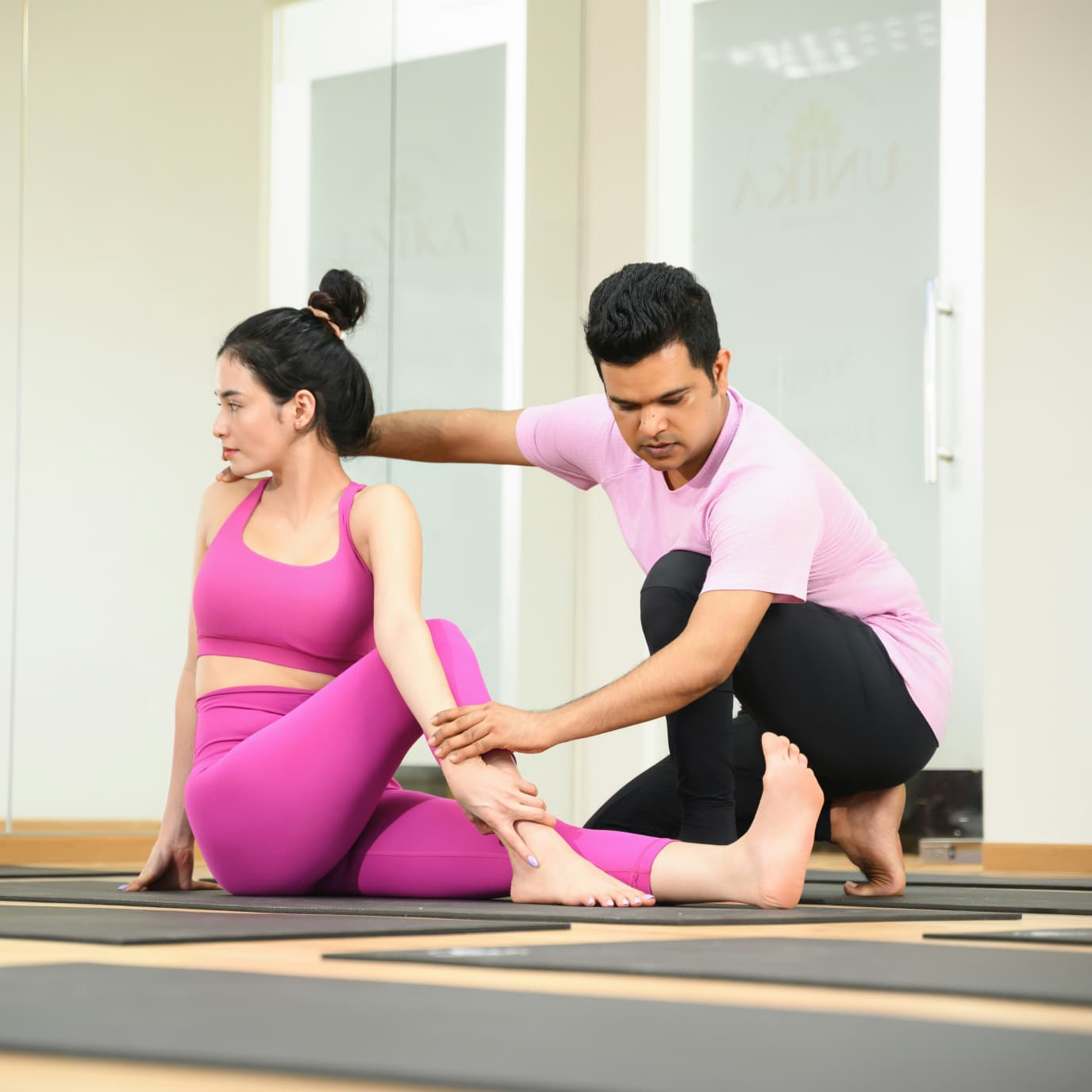
Sessions: Custom sequences designed specifically for your needs. Your therapist watches closely and adjusts in real-time.
Result: Individualised therapeutic support rather than a general group yoga practice.
Can You Do Both?
Yes. Many people enjoy group classes for community and fitness plus periodic therapy sessions for specific issues. They work together perfectly.
At Unika Yoga
We offer:
- Group yoga classes — Community and general wellness
- Personal yoga therapy — One-to-one therapeutic support for specific health conditions
- 300-Hour Yoga Therapy Certification — Professional training for teachers
Our founder, Dr. Kuldeep K Kushwah (PhD in Yoga), integrates traditional yogic wisdom with contemporary scientific understanding.
How to Choose
Regular yoga if you:
- Want general fitness and mindfulness
- Are relatively healthy
- Enjoy group settings
Yoga therapy if you:
- Have a specific condition or injury
- Need professional, personalized guidance
- Ready for personalised therapeutic support
Next Steps
Ready to get started?
📧 Email: unikayoga@gmail.com
📞 Phone: +65 8300 7895
Post a comment