
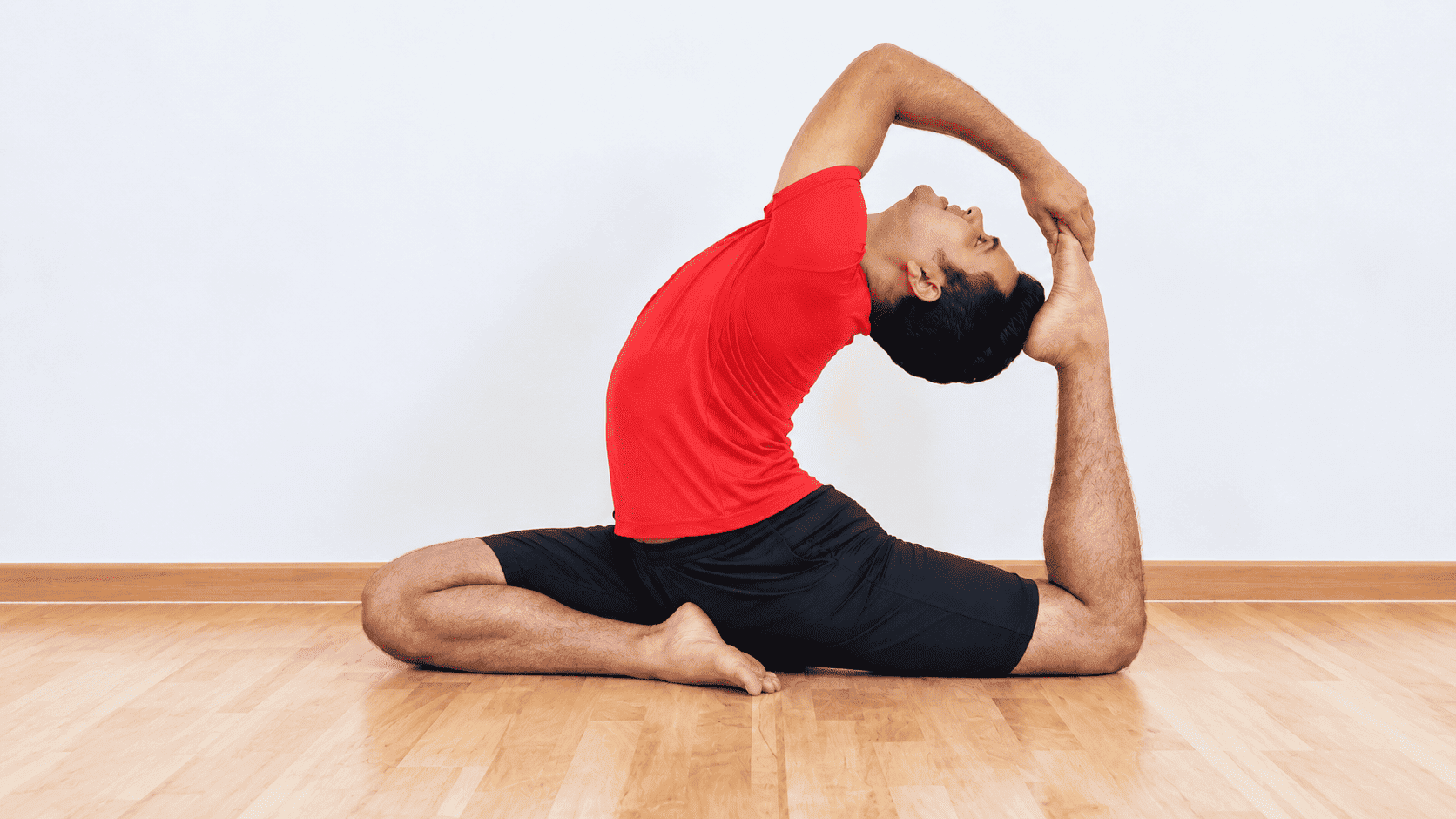
Backbend Practice in Yoga: How to Build Deeper, Safer Backbends
A practical guide to understanding backbends, preparing the body well, progressing from foundation to advanced practice, and knowing when deeper is not necessarily better.
Backbends are among the most expressive and demanding movements in yoga asana practice. They can feel energising and expansive, but they also ask for more than spinal flexibility.
A well-developed backbend depends on how the whole body works together: the spine, shoulders, chest, hips, legs, breath and nervous system all play a role. When one area is not ready, another area often tries to compensate.
This is why deeper backbends should not be approached as a test of flexibility. The real work is in preparation, control, awareness and gradual progression.
Backbending Is a Practice Within Yoga
It is more accurate to refer to backbend practice in yoga rather than “backbend yoga,” as backbends are part of the broader practice of yoga rather than a separate branch in themselves. Backbends are a family of asanas in which the spine moves into extension while the front body opens.
Common examples include Sphinx Pose, Cobra Pose, Bridge Pose, Camel Pose, Bow Pose and Wheel Pose. More advanced variations may involve deeper shoulder opening, hip extension, balance or transitions such as dropbacks.
The important point is that a backbend is not created only by bending the lower back. A more balanced backbend distributes movement and effort through several areas of the body.
What Makes a Backbend Feel More Open and Controlled?
Different bodies will express backbends differently, but several areas commonly influence the quality of the pose:
- Thoracic spine mobility – the upper and middle back need enough extension so the lumbar spine does not carry everything.
- Shoulder and chest mobility – important in poses such as Wheel, Forearm Wheel and deeper overhead variations.
- Hip-flexor and front-thigh mobility – especially important when the pelvis moves forward in Camel, lunges and standing backbends.
- Back, leg and glute strength – strength helps support the shape instead of simply hanging into flexibility.
- Breathing and control – a pose that is deeper but cannot be held with steady breathing is not necessarily a better pose.
Prepare the Body Before You Ask for Depth
Going directly into a deep backbend usually makes the practice feel harder and less organised. A short, intelligent preparation can change the quality of the final pose.
Depending on the session and the student, preparation may include:
- Cat-Cow or other gentle spinal movements to bring awareness to flexion and extension.
- Low-lunge variations to open the hip flexors and front thighs.
- Shoulder-opening drills, Puppy Pose or supported overhead work.
- Cobra, Locust or similar strength-based backbends to wake up the posterior chain.
- Sun Salutations or other whole-body movements to raise body temperature before deeper work.
The purpose of a warm-up is not to collect as many stretches as possible. It is to prepare the specific movement patterns required for the backbend you plan to practise.
Backbend Progression: Foundation, Intermediate and Advanced
These levels are useful as a guide, but they are not fixed labels. A student may be experienced in yoga and still be at a foundation stage in backbending, while another student may progress more quickly in one pose than another.
Progress should be based on control, comfort, breathing and preparation – not simply on how long someone has practised yoga.
| Stage | Examples | Main Focus |
| Foundation | Sphinx, Cobra, Bridge | Body awareness, spinal extension and basic back-body strength |
| Intermediate | Locust, Bow, Camel | More strength, chest and shoulder opening, hip extension |
| Advanced | Wheel, deeper Pigeon variations, Dropbacks | Integrated strength, mobility, control and confidence |
Foundation Backbends
Sphinx, Cobra and Bridge are valuable because they teach the body how to create extension without immediately demanding a large range of motion. They are also useful for learning how the legs, back muscles and breath support the pose.
Intermediate Backbends
Locust and Bow add more posterior-chain strength. Camel asks for greater hip extension and chest opening while maintaining support through the legs and trunk. At this stage, the quality of preparation becomes increasingly important.
Advanced Backbends
Wheel Pose and deeper variations require the shoulders, spine, hips and legs to work together. Dropbacks and advanced transitions add another layer: control while entering and leaving the pose. These practices are best learned progressively with experienced guidance.
Six Principles for a Better Backbend Practice
- Create length before depth. Think of extending through the spine before asking for more arch.
- Share the movement. Avoid making the lower back responsible for the entire shape.
- Use the legs. Strong, active legs give the pelvis and spine a more stable base.
- Let the chest lead. In many backbends, lifting through the sternum creates a more balanced shape than simply dropping the head back.
- Keep the breath available. If breathing becomes strained, reduce the depth and regain control.
- Progress gradually. A smaller pose performed well is more useful than a deeper pose reached through force.
Common Mistakes in Backbend Practice
- Chasing depth before the shoulders, hips and upper back are prepared.
- Collapsing repeatedly into the lumbar spine.
- Holding the breath or rushing through the entry.
- Throwing the head back before the chest has lifted.
- Letting the knees or feet lose their intended alignment in Bridge or Wheel.
- Comparing one body with another instead of working with individual structure and mobility.
- Practising deep backbends when the body is cold, fatigued or already irritated.
When Backbends Need More Care
Backbends should not create sharp pain, pinching, numbness, tingling or a feeling that the spine is being compressed. A strong muscular effort or stretch can be part of practice; pain is a reason to stop and reassess.
If you have an existing spinal condition, recent surgery, significant neck or shoulder problems, cardiovascular concerns, pregnancy or another health condition that may affect exercise, deeper backbends may require modification or professional guidance.
The appropriate practice depends on the individual. Yoga instruction should complement, not replace, medical assessment when a health condition or persistent pain is present.
Backbend Practice at Unika Yoga & Therapy Singapore
At Unika Yoga & Therapy, backbend practice is approached progressively. Classes and workshops may include mobility drills, strength work, alignment, preparation and pose-specific progressions before deeper backbends are introduced.
Students range from beginners building their first foundations to intermediate and advanced practitioners working on deeper variations. The emphasis is not on pushing everyone toward the same final shape, but on helping each student understand the preparation and progression appropriate for their body.
For students who want more individual attention, one-to-one yoga training can focus specifically on mobility restrictions, strength, technique and a personalised progression toward particular backbend goals.
A Backbend Is a Process, Not a Performance
A deeper backbend does not automatically mean a better practice.
What matters is whether the body has been prepared, whether the movement is shared well, whether you can breathe, and whether you can enter and leave the pose with control.
With consistent practice, good guidance and patience, backbends can become stronger, more spacious and more confident over time. The aim is not to force the body into a shape, but to understand the body well enough to let the shape develop.
Interested in exploring backbend practice more deeply?
View our yoga classes, workshops and one-to-one training at Unika Yoga & Therapy Singapore or contact us to find the most suitable option for your practice.
Frequently Asked Questions About Backbend Practice
Can beginners practise backbends?
Yes. Foundation backbends such as Sphinx, Cobra and Bridge can introduce spinal extension gradually. Beginners do not need to attempt Wheel Pose or deep backbends to benefit from the practice.
How long does it take to learn Wheel Pose?
There is no reliable fixed timeline. Shoulder mobility, spinal mobility, strength, proportions, previous training and consistency all affect progress. It is more useful to measure control and preparation than to chase a deadline.
Why do I feel backbends mostly in my lower back?
Sometimes the lumbar spine is taking more movement than the upper back, shoulders or hips can currently contribute. Reducing the depth and improving preparation can help, but persistent discomfort should be assessed individually.
Do I need to be very flexible to practise backbends?
No. Strength, control and body awareness are just as important as flexibility. A stable, moderate backbend can be more useful than a very deep pose performed without control.
How can I improve my backbends?
Work consistently on the areas your chosen pose requires – commonly upper-back extension, shoulder mobility, hip extension, leg strength and back-body strength – and practise the pose progressively rather than forcing depth.