
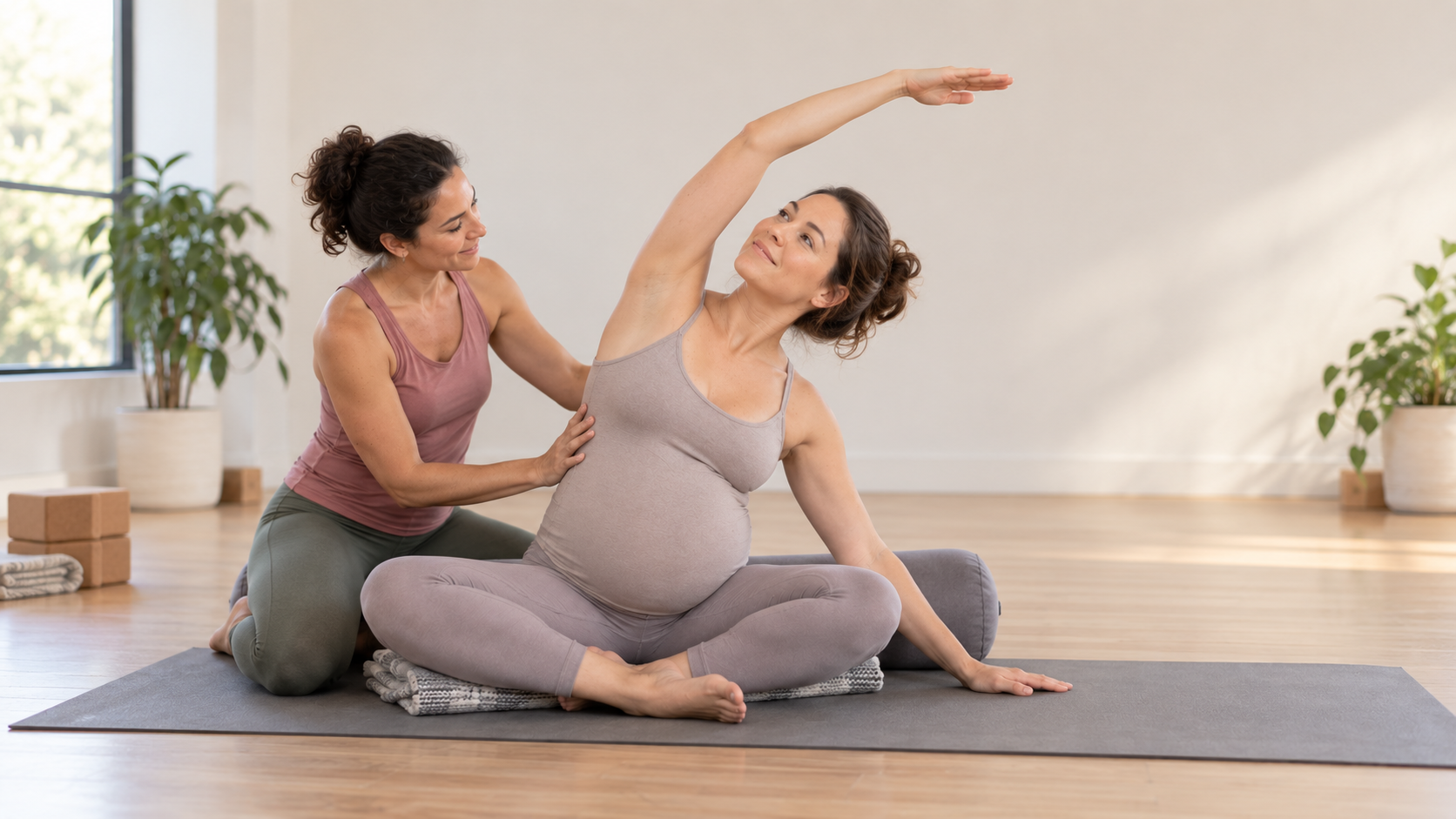
Prenatal Yoga in Singapore: Benefits, Safety & Yoga Practices for Pregnancy
A practical guide to prenatal yoga, safe movement, breathing, trimester-based practice and the traditional perspective of Garbha Sanskar.
Pregnancy changes more than the shape of the body. It can change how you sleep, breathe, move, work and feel from one week to the next. Back tension, fatigue, changes in balance and uncertainty about labour can all become part of the experience.
Prenatal yoga offers a way to slow down and work with those changes rather than against them. It is not about becoming more flexible or mastering difficult poses. It is about moving with awareness, maintaining appropriate strength and mobility, breathing more consciously and creating time to settle the mind.
When taught thoughtfully and adapted to the individual, prenatal yoga can become a supportive practice throughout pregnancy.
What Is Prenatal Yoga?
Prenatal yoga is yoga adapted specifically for pregnancy. A typical practice may include gentle movement, modified asanas, breathing practices, pelvic-floor awareness, relaxation and meditation.
The emphasis changes as pregnancy progresses. The aim is not to practise exactly as you did before pregnancy, but to respond intelligently to a changing centre of gravity, greater joint laxity, abdominal growth, energy levels and any advice given by your maternity-care team.
A well-designed prenatal yoga class should support strength and mobility without creating strain, breath-holding, overheating or pressure on the abdomen.
Benefits of Prenatal Yoga During Pregnancy
For a healthy, uncomplicated pregnancy, appropriately modified yoga can be a useful form of physical activity. Gentle movement, stretching and breathing may support posture, mobility, relaxation and overall wellbeing during pregnancy.
Many expectant mothers value prenatal yoga because it gives them practical ways to manage everyday discomfort while also creating a regular pause from work, family responsibilities and the mental load that often accompanies pregnancy.
A prenatal yoga practice may help support:
- Comfortable mobility — as the body adapts to changes in posture and weight distribution.
- Back and hip comfort — through appropriate movement, positioning and muscular support.
- Strength and balance — with movements adapted to the changing centre of gravity.
- Breathing awareness — which can be useful for relaxation and preparation for labour.
- Stress management — through slower movement, mindful breathing and relaxation.
- Body awareness — helping you notice when to move, modify, rest or ask for additional guidance.
Pregnancy is individual. If you have gestational diabetes, blood-pressure concerns, placenta-related conditions, cervical issues, bleeding, significant pelvic pain or any other medical or obstetric complication, exercise recommendations may need to be modified. In these situations, follow the advice of your obstetrician, midwife or other maternity-care professional before beginning or changing your practice.
Prenatal Yoga and the Traditional Concept of Garbha Sanskar
In the Indian tradition, pregnancy has also been approached through the concept of Garbha Sanskar — a broader way of nurturing the mother’s physical, mental and emotional environment during pregnancy.
Practices associated with this tradition may include yoga, meditation, mindful breathing, mantra, music, positive reflection and attention to daily habits. The emphasis is not only on preparing the body for childbirth, but also on supporting a calmer and more conscious experience of pregnancy.
From a contemporary perspective, gentle movement, relaxation and breathing practices can give an expectant mother valuable time to slow down, manage stress and connect more consciously with the experience of pregnancy. Traditional practices and medical care should complement rather than replace one another.
Is Prenatal Yoga Safe During Pregnancy?
For many women with healthy, uncomplicated pregnancies, prenatal yoga can be practised safely when it is appropriately modified. The safest approach is to inform your healthcare provider and yoga teacher about your pregnancy and any relevant medical history.
A few practical principles are especially important:
- Avoid overheating and very hot yoga environments.
- Avoid movements that compress the abdomen or require forceful, deep twisting.
- Avoid pushing into extreme ranges of motion. Pregnancy hormones can increase joint laxity, so greater flexibility does not always mean a movement is appropriate.
- As pregnancy progresses, particularly after around 16 weeks, prolonged exercise while lying flat on the back is generally avoided. Side-lying, inclined or other comfortable alternatives can be used.
- Avoid breath-holding or straining. Breathing should remain comfortable and steady.
- Stop and seek medical advice if you feel unwell or develop concerning symptoms during exercise.
A qualified prenatal yoga teacher can help adapt positions according to trimester, comfort, previous yoga experience and advice from your maternity-care team.
Gentle Prenatal Yoga Practices to Explore
The following are general examples for healthy, uncomplicated pregnancies. They are not a substitute for individual medical advice. If you have a pregnancy complication, pain, bleeding, activity restrictions or uncertainty about any movement, seek guidance before practising independently.
1. Cat-Cow / Gentle Spinal Movement
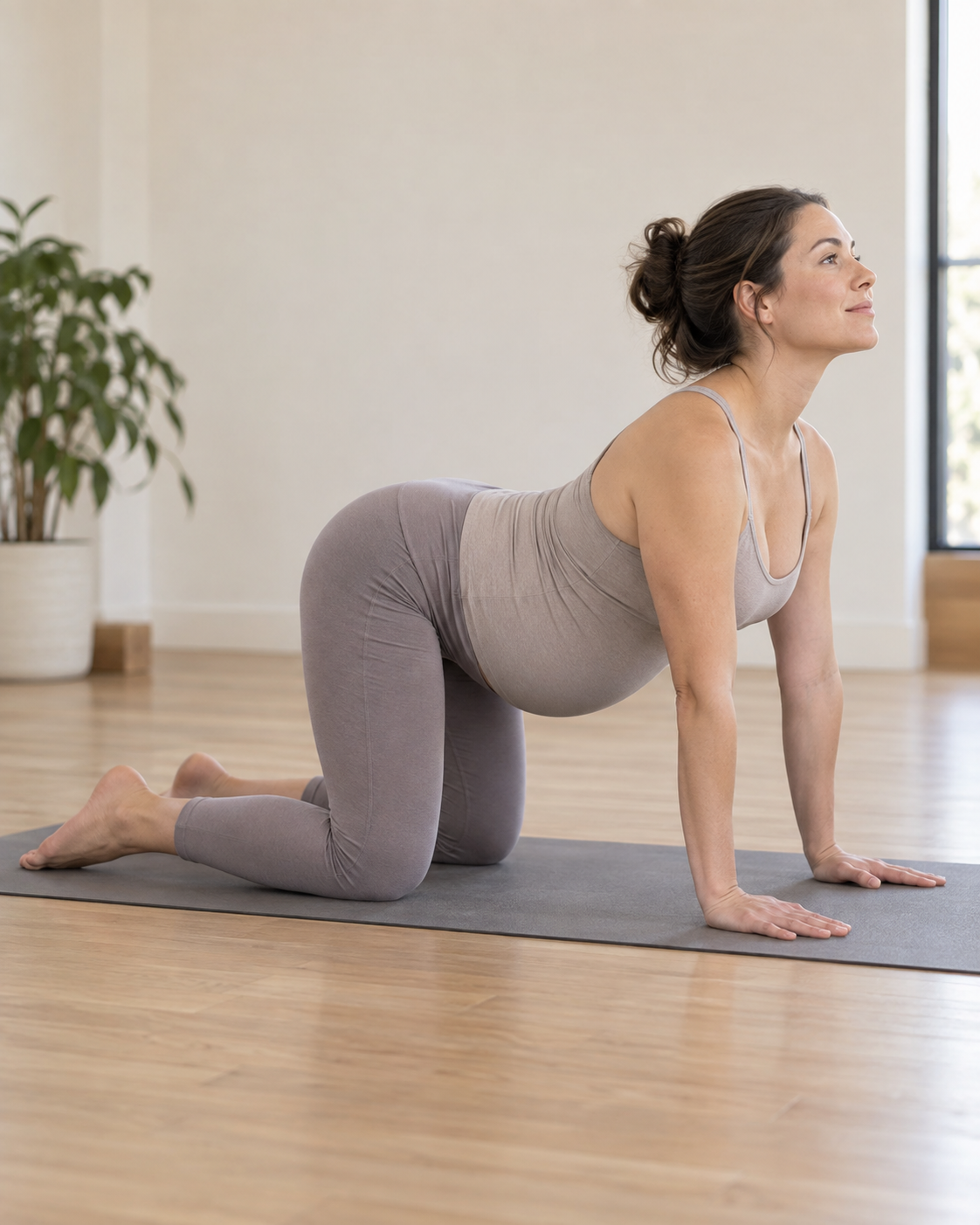
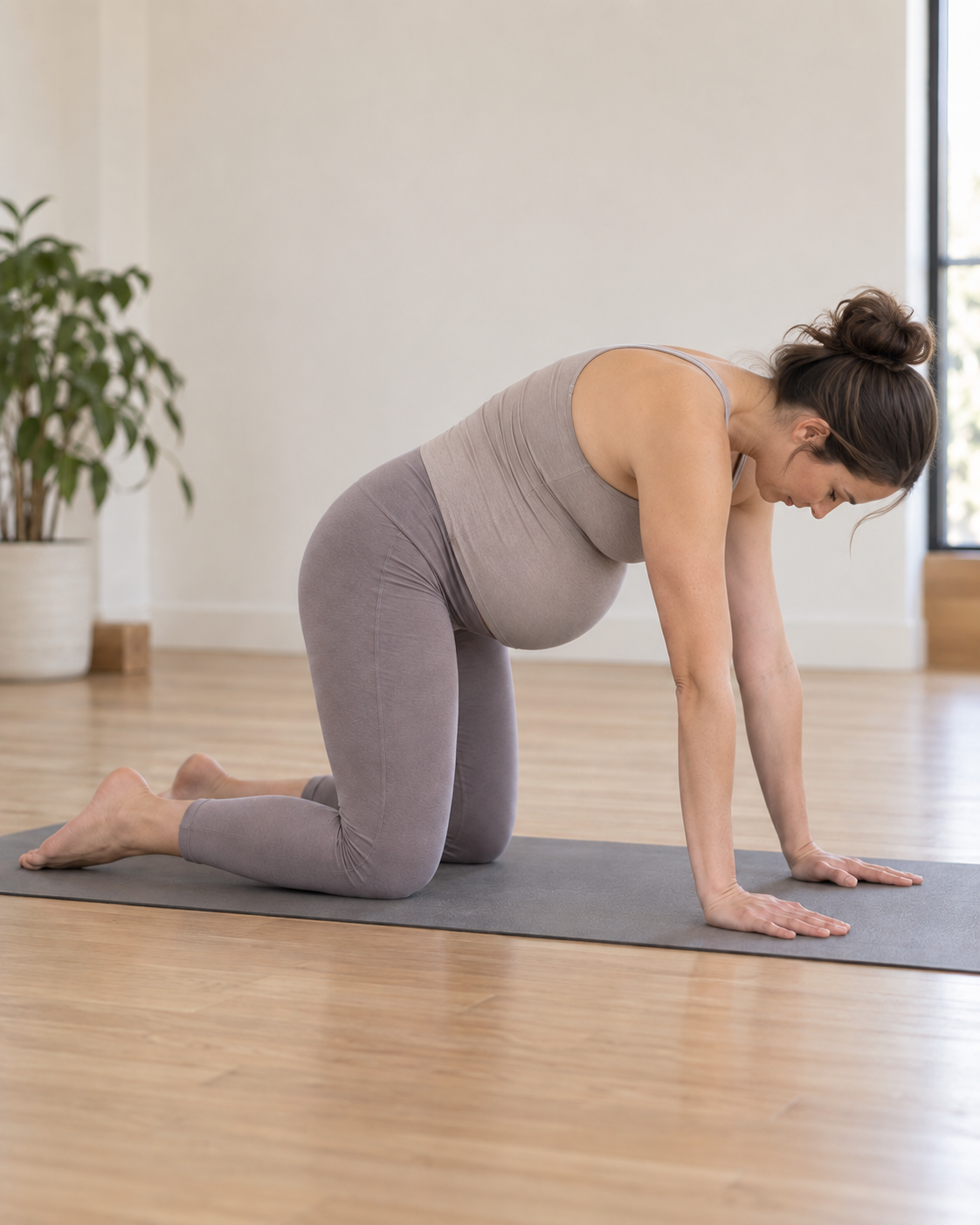
Come onto hands and knees with the wrists under the shoulders and knees under the hips. Move the spine gently with the breath: allow a comfortable extension as you inhale, then gently round the back as you exhale. Keep the movement smooth rather than forcing either end range.
This can be useful for maintaining spinal mobility and easing general back tension.
2. Supported Squat
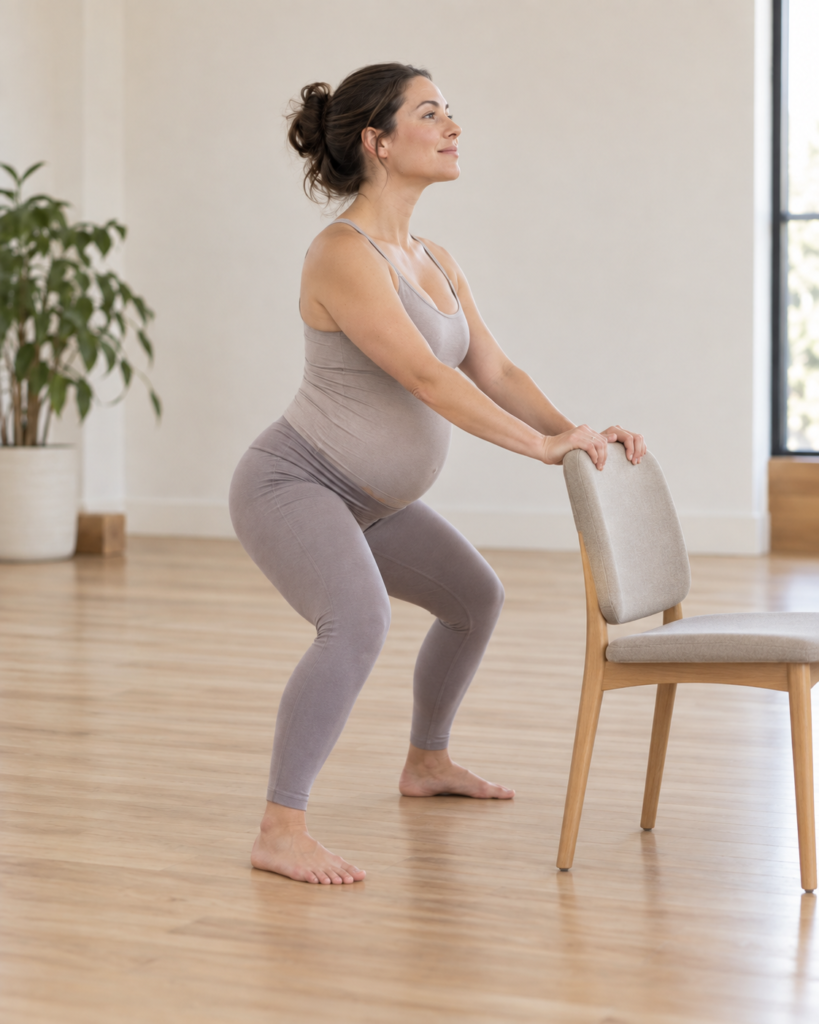
Stand with the support of a stable chair, wall or other secure surface. Place the feet comfortably apart and lower only as far as feels steady and pain-free. Keep the breath relaxed and use support rather than forcing depth.
A supported squat can help explore hip mobility and comfortable positions that may also be useful during labour. It is not appropriate for everyone, so if you have been given pelvic, cervical or activity restrictions, follow your healthcare provider’s advice.
3. Butterfly Pose (Baddha Konasana)
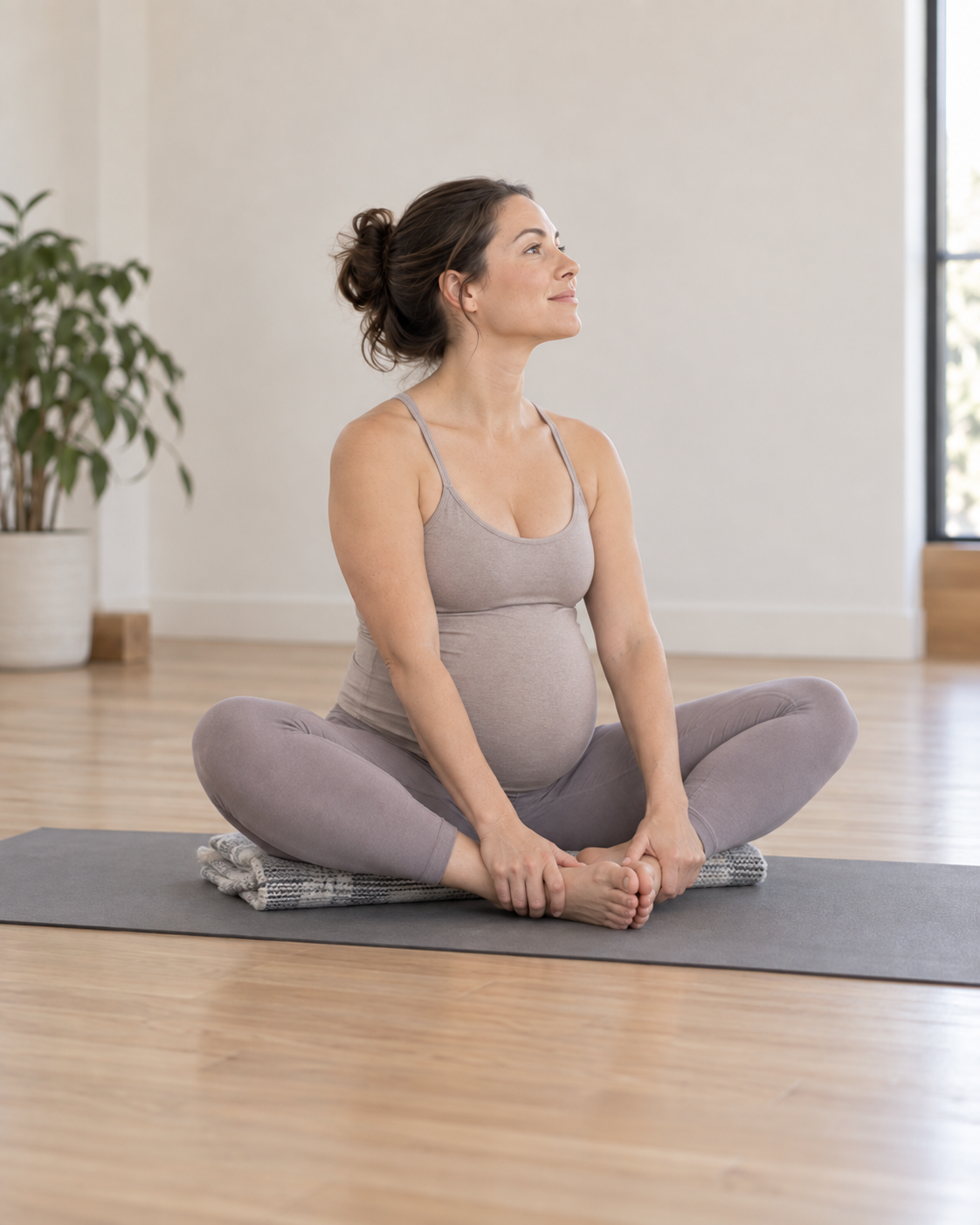
Sit on a cushion or folded blanket, bring the soles of the feet together and allow the knees to move outward without forcing them toward the floor. Keep the spine comfortable and use support under the thighs if needed.
This can offer a gentle way to explore hip mobility. Avoid pushing into discomfort or using the pose if your maternity-care team has advised activity or pelvic-movement restrictions.
4. Wide-Knee Child's Pose
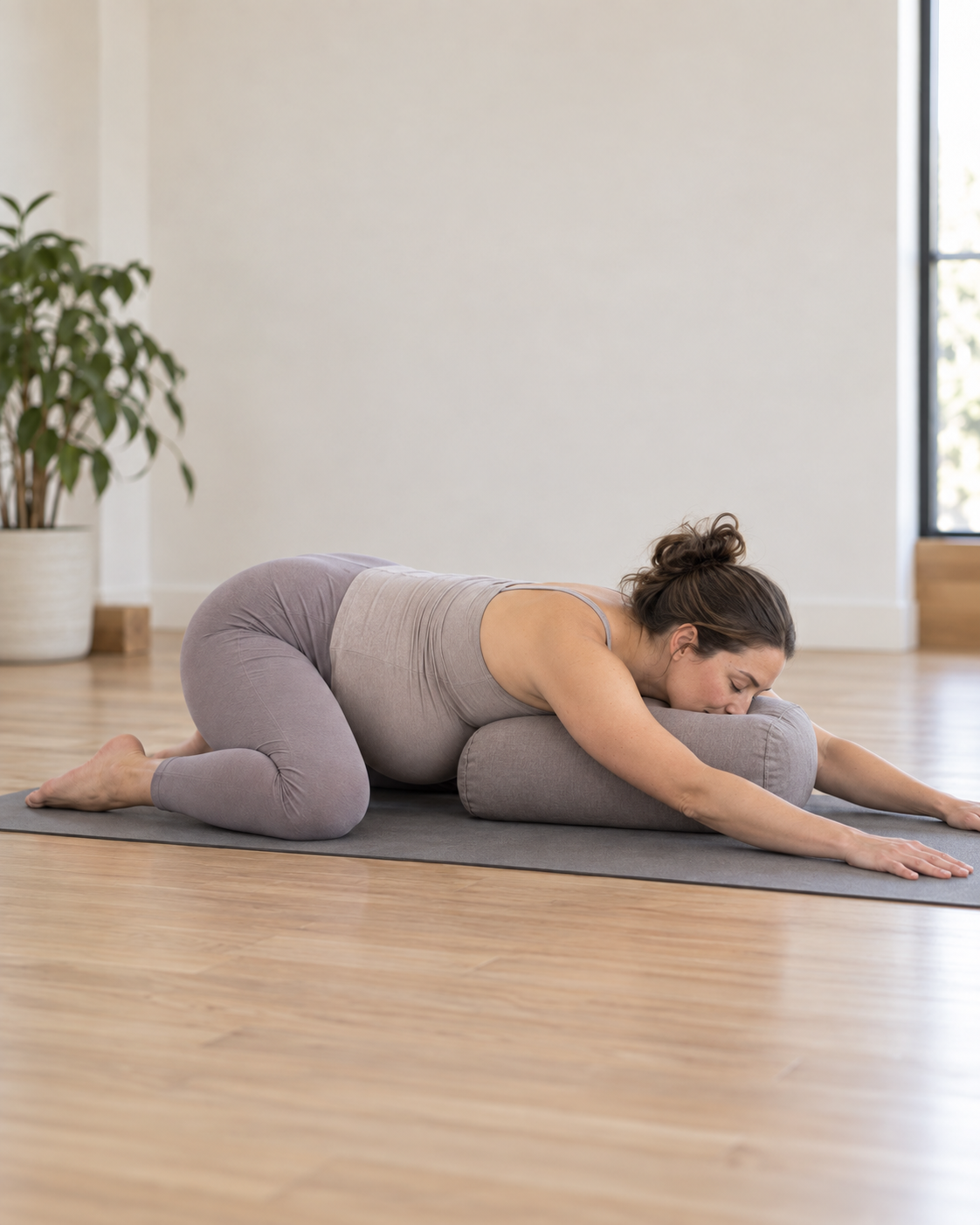
Start on your hands and knees. Slowly move your knees wider apart so there is plenty of space for your belly. Then gently move your hips back toward your heels, only as far as feels comfortable. Keep your abdomen free from pressure. You can place a bolster, cushion or folded blanket under your chest and forehead for support. Stay here for a few slow, comfortable breaths.
This position can help relax the back, hips and pelvic area while giving you a comfortable place to slow down and breathe.
5. Seated Side Stretch
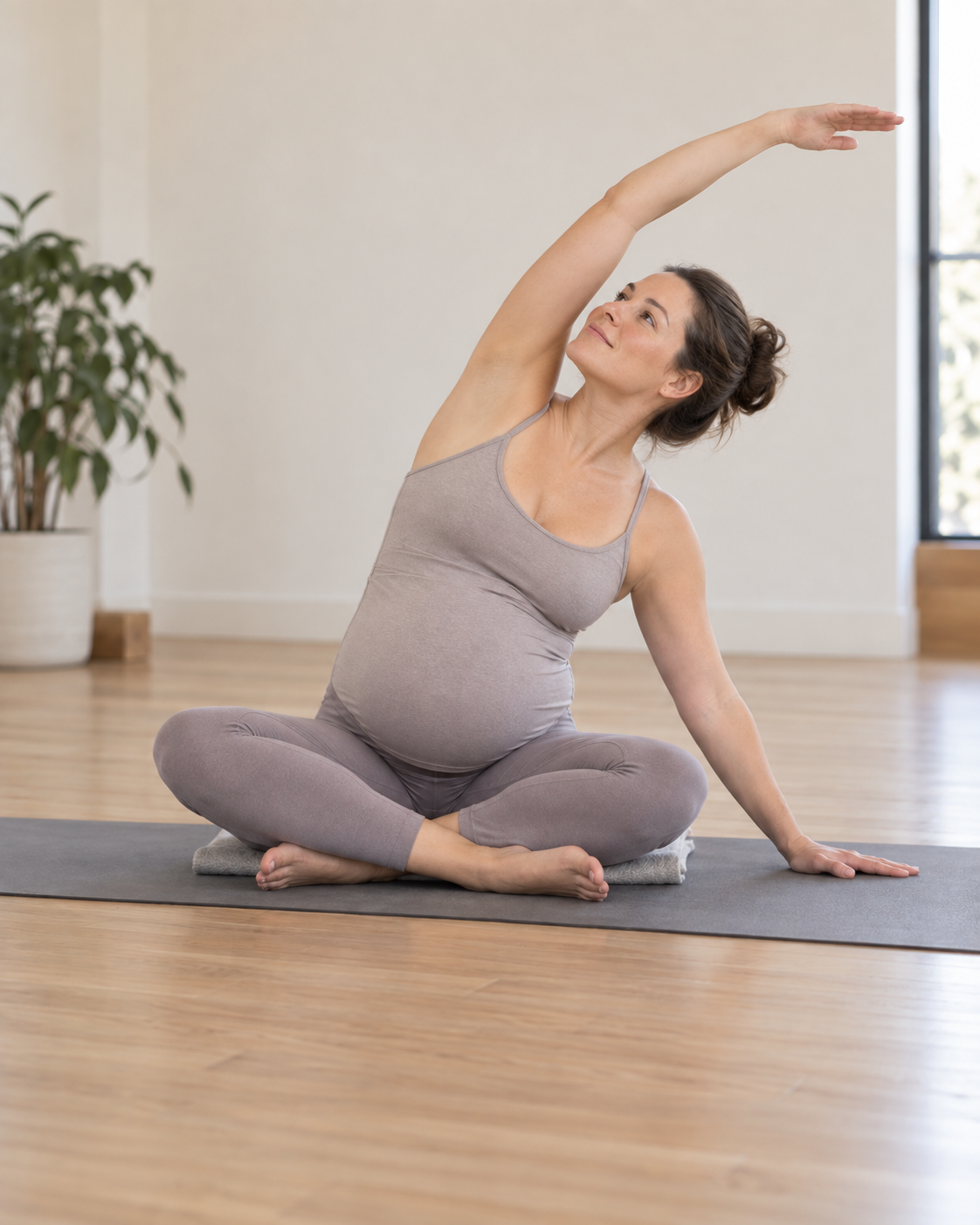
Sit comfortably on the floor or on a chair with your spine upright and shoulders relaxed. Place one hand beside you for support. Raise the opposite arm overhead. Slowly lean your upper body to the side, away from the raised arm. Keep your chest facing forward and avoid twisting. Only move as far as you can comfortably while keeping both sides of the pelvis grounded.
Take 3–5 relaxed breaths, return slowly to the centre, then repeat on the other side.
This gentle stretch creates more space through the ribs and side body and may help ease tension around the back and waist.
6. Seated Parvatasana / Upward Arm Stretch
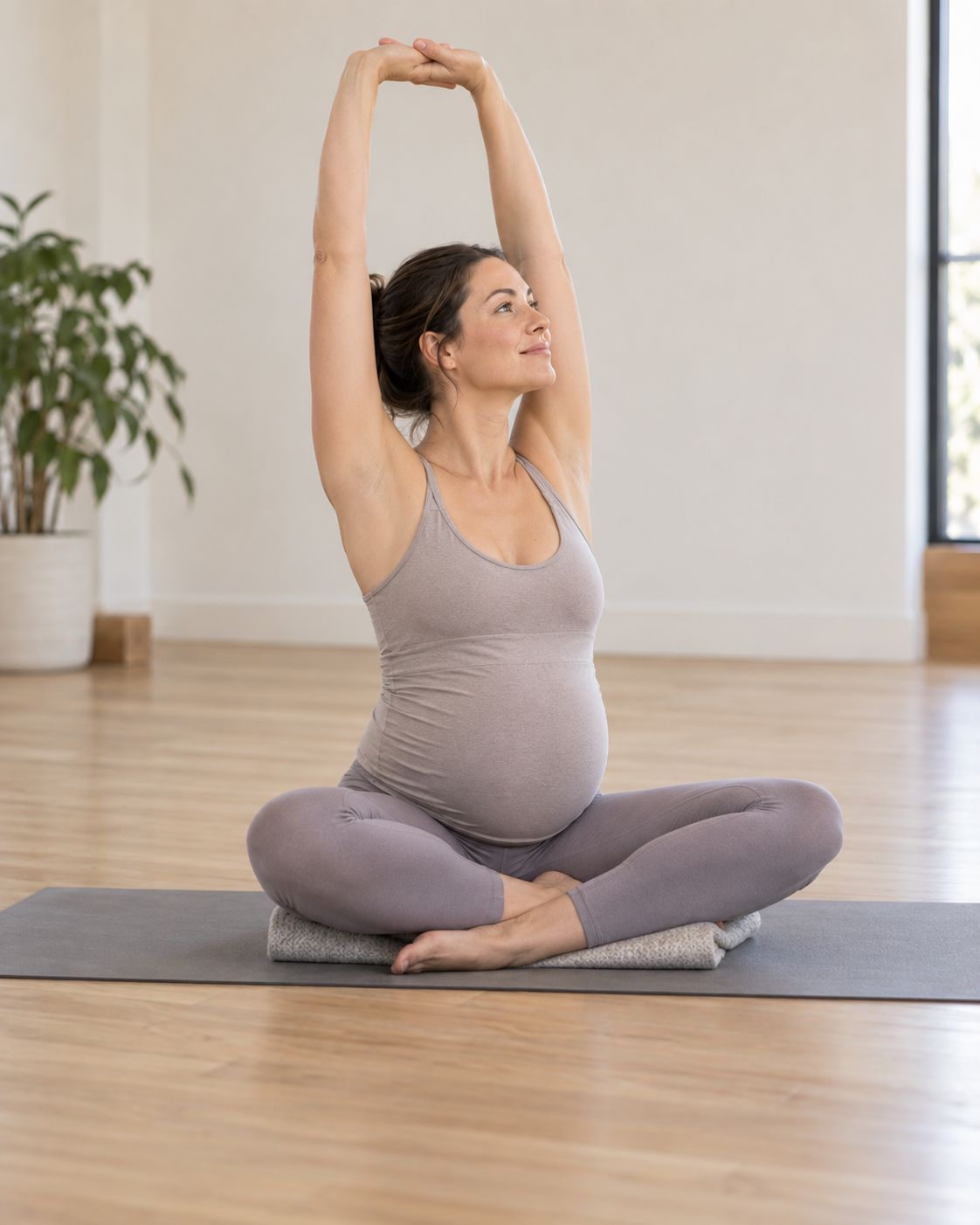
Sit comfortably on a chair or on the floor. Interlace the fingers if comfortable, turn the palms outward and raise the arms overhead while keeping the shoulders relaxed. Breathe naturally and lower the arms slowly.
This can support upright posture, shoulder mobility and comfortable expansion through the upper body.
7. Supported Tadasana
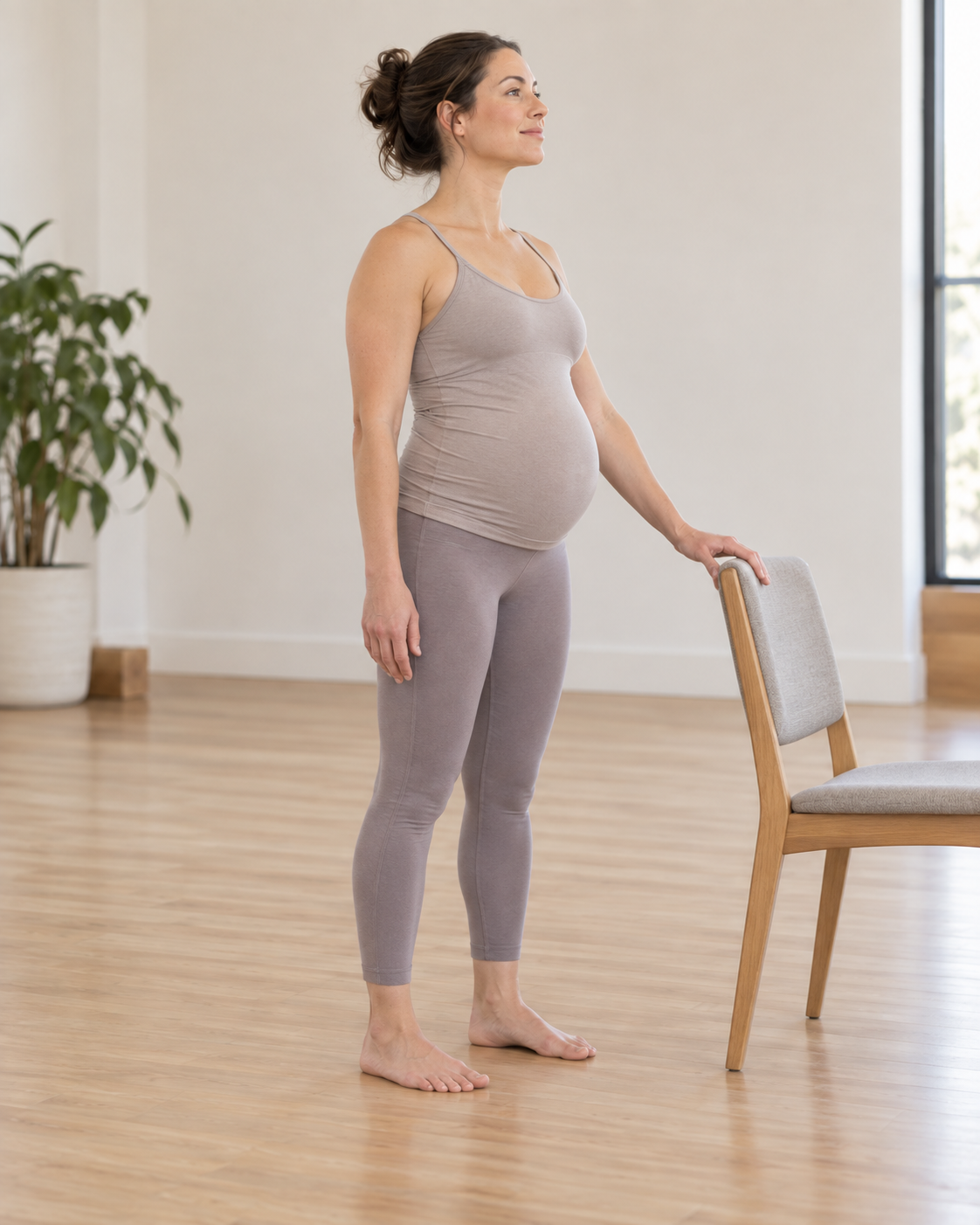
Stand with the feet comfortably apart and use a wall or stable support if balance feels different during pregnancy. Lengthen through the spine and allow the shoulders to relax. If rising onto the toes feels stable and has been cleared for you, do so slowly and with support.
The focus is balance, posture and awareness rather than intensity.
Breathing & Relaxation During Pregnancy
One of the most useful parts of prenatal yoga is learning to breathe consciously without forcing the breath.
Sit in a supported position and allow the breath to move comfortably through the rib cage and abdomen. Inhale through the nose without trying to take an unusually large breath. Exhale slowly and completely, keeping the face, jaw and shoulders relaxed.
A comfortable, slightly longer exhalation may help encourage relaxation. Avoid forceful pranayama, prolonged breath retention or any technique that creates pressure, dizziness or discomfort unless it has been specifically adapted and cleared for pregnancy.
Simple breathing awareness can become a practical tool before sleep, during moments of anxiety and as part of preparation for labour.
Prenatal Yoga Through the Three Trimesters
First Trimester
Fatigue, nausea and changing energy levels are common. Practice may need to be shorter, gentler and more restorative. If you feel well, familiar movement can often continue with appropriate modifications, but this is not the time to suddenly begin an intense new exercise routine.
Second Trimester
Many women feel more energetic during this stage. Practice can include appropriate strength, mobility and balance work while making more space for the growing abdomen. Prolonged lying flat on the back is generally avoided as pregnancy progresses.
Third Trimester
Practice often becomes slower, more supported and increasingly focused on comfort, breathing, mobility and preparation for birth. Balance can change significantly, so walls, chairs, bolsters and other props may be useful.
When Prenatal Yoga Needs to Be Modified
Not every pregnancy follows the same pattern. Some women may be advised to reduce or temporarily stop certain forms of exercise because of medical or obstetric concerns.
Seek individual guidance if you have been diagnosed with a placenta-related condition, cervical weakness or cerclage, pre-eclampsia, significant bleeding, severe anaemia, heart or lung conditions, a complicated multiple pregnancy, a history of preterm birth, or any other condition for which your maternity-care team has given activity restrictions.
A prenatal yoga teacher should work within those medical recommendations rather than trying to override them. In some situations, the appropriate practice may be limited to supported relaxation, gentle joint movement and comfortable breathing; in others, exercise may need to be paused completely.
When to Stop and Seek Medical Advice
Stop exercising and contact your maternity-care team if you experience symptoms such as vaginal bleeding, dizziness or faintness, chest pain, severe shortness of breath, painful regular contractions, leaking fluid, or a significant change in your baby’s usual movements once movements are established.
If something simply does not feel right, that is also a good reason to stop and ask for advice.
Getting Started with Prenatal Yoga
A good prenatal yoga class should feel supportive rather than competitive. You should be encouraged to rest when needed, use props, ask questions and modify movements according to how you feel that day.
If possible, choose a teacher with specific prenatal-yoga training and practical experience working with pregnant women. Let the teacher know your trimester, previous yoga experience and any instructions given by your healthcare provider.
For frequency, consistency matters more than intensity. Some women enjoy several gentle sessions each week, while others benefit from one regular class combined with short breathing or mobility practices at home. The right amount depends on your health, energy, schedule and medical guidance.
Prenatal Yoga at Unika Yoga & Therapy Singapore
At Unika Yoga & Therapy, prenatal yoga is approached with care, individual attention and respect for the changing needs of pregnancy.
Under the guidance of Dr Kuldeep K. Kushwah, our approach brings together yoga experience, thoughtful adaptation and an understanding of safe, individualised practice. Prenatal sessions are also supported by Ms. Shivani Kushwah, an experienced yoga teacher with prenatal yoga training. Together, the focus is on adapting the practice according to the stage of pregnancy, individual comfort and specific needs. Sessions may include appropriate asanas, mobility work, breathing, relaxation and meditative practices.
Whether you are new to yoga or already have an established practice, the aim is not to push the body through pregnancy. It is to help you continue moving, breathing and practising with greater awareness.
For women who prefer more individualised guidance, private prenatal yoga sessions can also allow the practice to be adapted more closely to comfort, experience and healthcare recommendations.
A Practice of Support, Not Performance
Pregnancy is not a time when yoga needs to look impressive. It is a time to listen more carefully.
A thoughtful prenatal practice can help you stay connected with your body as it changes, create space for rest and reflection, and develop breathing and movement skills that may remain useful throughout pregnancy and birth.
The most valuable practice is not necessarily the deepest pose or the longest session. It is the one that helps you feel supported, steady and present in the body you have today.
Always consult your healthcare provider before beginning a new exercise practice during pregnancy, particularly if you have a medical or obstetric condition. Prenatal yoga should complement, not replace, professional maternity care.
Frequently Asked Questions About Prenatal Yoga
For many women with healthy, uncomplicated pregnancies, prenatal yoga can be practised safely when movements and breathing practices are appropriately modified. Let your teacher know that you are pregnant, and follow any advice or restrictions given by your obstetrician, midwife or maternity-care team.
If your pregnancy is progressing normally and your healthcare provider has not advised activity restrictions, prenatal yoga can generally be introduced with appropriate modifications.
Yes. You do not need previous yoga experience to join a well-designed prenatal class. A qualified teacher can offer simpler variations, props and rest options so that the practice is appropriate for your experience, trimester and comfort on that day.
Avoid hot yoga, positions that strongly compress the abdomen, forceful deep twists, extreme ranges of motion, breath-holding and straining. As pregnancy progresses, particularly after around 16 weeks, prolonged exercise while lying flat on the back is generally avoided. Individual medical or obstetric conditions may require additional restrictions.
Often, yes, if you feel well and your maternity-care team has not advised otherwise. Third-trimester practice is usually slower and more supported, with greater attention to balance, comfortable mobility, breathing, relaxation and preparation for birth. Chairs, walls, bolsters and other props can be helpful.
There is no single schedule that suits every pregnancy. Consistency is usually more useful than intensity. Some women enjoy several gentle sessions each week, while others prefer one regular class plus short breathing or mobility practices at home. Your energy levels, health, trimester and medical guidance should determine what is appropriate.
It is good practice to discuss a new exercise programme with your healthcare provider during pregnancy. This is especially important if you are new to exercise or have bleeding, blood-pressure concerns, placenta-related conditions, cervical issues, pain, a complicated pregnancy or any other reason you have been advised to limit activity.