Sound Bath vs Sound Healing: What’s the Difference and What Should You Expect?
By Unika Yoga & Therapy
If you have looked at a wellness schedule lately, you have probably seen both “sound bath” and “sound healing.” They sound alike, so it is natural to wonder: Are they the same thing? Which one should I try? And what actually happens in a session?
This guide answers these questions in simple words, so you can walk in feeling relaxed and prepared.
The two terms overlap a lot. Both use gentle sounds, such as singing bowls, chimes and gongs, to help you rest deeply while you lie down.
- Sound bath: usually a group session where you lie back and let the sound “wash over” you.
- Sound healing: a wider term. It includes sound baths, but can also mean one-to-one sessions or sessions built around a personal goal, like easing stress.
Many studios, including ours, use both names for similar experiences. So it always helps to read the session description before you book.
What Is a Sound Bath?

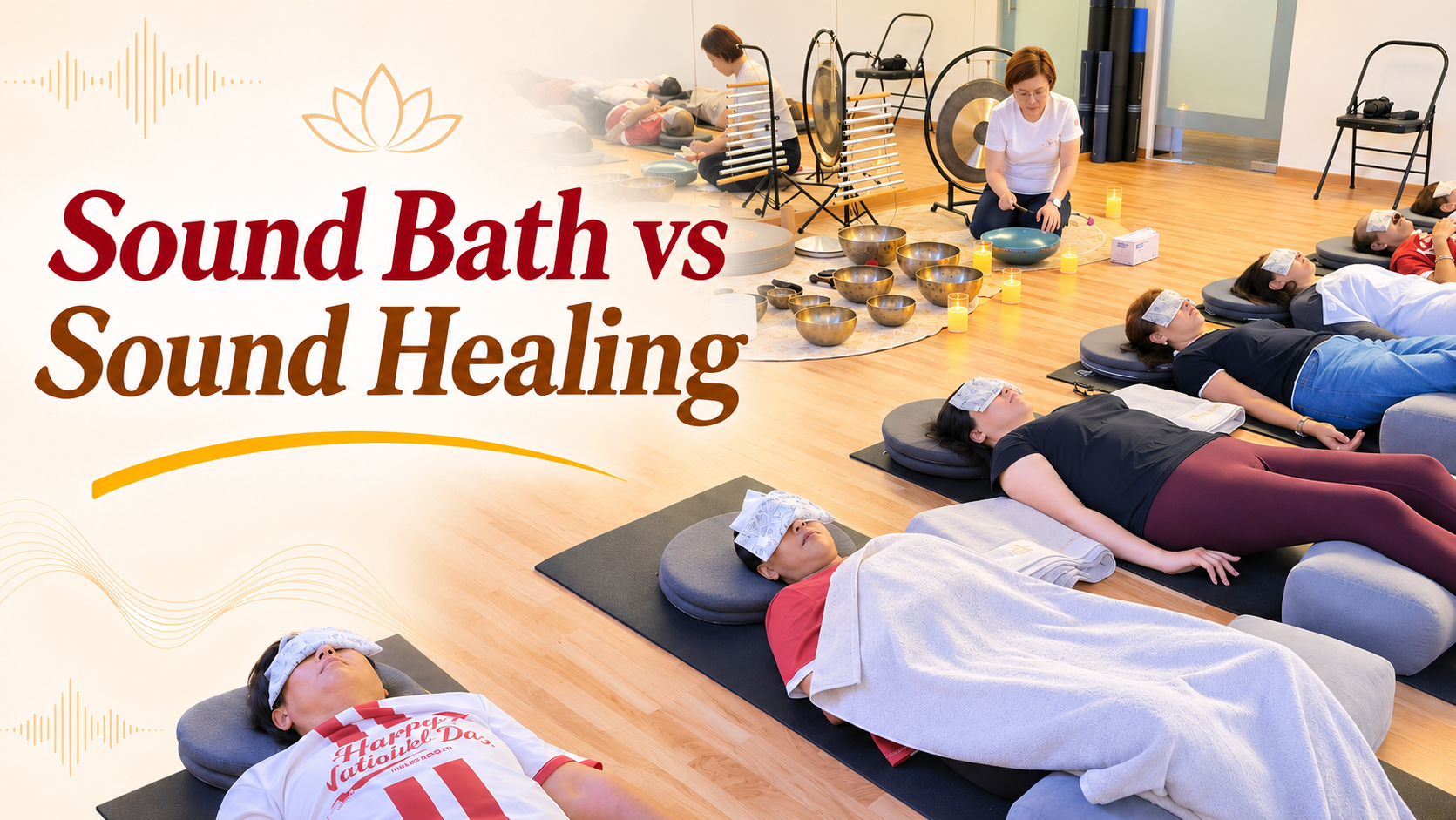
A sound bath is not a bath with water. It is a quiet session where you lie on a mat, close your eyes and listen. A facilitator plays instruments such as Tibetan bowls, chimes and gongs. The sounds slowly rise, swell and fade away.
You do not need to do anything. There is nothing to master and no pose to hold. Most group sessions last about 60 to 90 minutes.
What Is Sound Healing?

Sound healing is an umbrella term for using sound and vibration to support relaxation and wellbeing. A session might be a group sound bath, a private one-to-one, or a corporate session for a team. The facilitator may also invite you to set a simple intention before you begin, such as “rest” or “let go of stress.”
One important note: sound healing is a relaxation practice. It is not a medical treatment, and it does not replace care from your doctor.
Sound Bath vs Sound Healing at a Glance
| Sound Bath | Sound Healing | |
| What it means | A relaxing group session of sound | A wider term for using sound to support wellbeing |
| Usually | Group, lying down | Group or one-to-one |
| Main focus | Deep rest | Rest, plus a personal goal or intention |
| Your role | Lie back and listen | Lie back and listen; sometimes share a goal first |
| Good for | First-timers and busy people | Anyone who wants a more personal session |
How Is It Different from Meditation or Music Therapy?

- Meditation asks you to focus and quiet your mind. In a sound bath, the sound guides you, so you can simply listen. This is why many beginners find it easier.
- Music therapy often involves singing, playing instruments or talking about feelings. Sound healing is more receptive. You rest and let the sound do the work.
What Should You Expect?

Before your session
- Arrive 10 to 15 minutes early so you do not feel rushed.
- Wear loose, comfortable clothes.
- Have a light meal beforehand. Avoid going in too full or too hungry.
- Tell the facilitator about any health concerns.
- At Unika, we provide mats, blankets, cushions, bolsters and eye pillows.
During your session
- You lie down and get comfortable, with a blanket and an eye pillow if you like.
- The facilitator begins with soft sounds that slowly build and then fade.
- Your mind may wander. That is fine. Falling asleep is fine too.
- You may feel warmth, tingling, heaviness or deep calm. Some people feel emotional. Everyone is different, and there is no “right” way to feel.
After your session

- Get up slowly and take a few quiet minutes.
- Drink some water.
- Most people feel calm and light. Some feel sleepy or emotional for a while, which is normal.
- If you can, avoid rushing straight into a busy schedule.
Possible Benefits (Without the Hype)
Many people say they feel calmer, less tense and more rested after a session. Some add it to their routine to manage everyday stress and to wind down before sleep. Research on sound healing is still growing, so it is best seen as a gentle self-care practice, not a cure.
It also works well alongside other habits. If you are curious about the bigger picture of body and mind care, read about yoga therapy and how it differs from regular yoga, or see why sound healing is becoming so popular.
Who Should Check First?
Please speak to your doctor, and let your facilitator know before booking, if you:
- Have severe sensitivity to sound or a hearing condition
- Have a neurological condition
- Are pregnant
- Have any health concern you are unsure about
Our public group sessions are for ages 9 and above.
Questions to Ask Before You Book
- Is this a group or a one-to-one session?
- How long is it, and how many people attend?
- Who is leading it, and are they trained?
- Do I need to bring anything?
- Are there any health restrictions I should know about?
Ready to Try a Session?
The best way to understand the difference is to experience it. Come and rest with us at Unika Yoga & Therapy.
- Explore our sound healing sessions in Singapore
- See our upcoming workshops and events
- Not sure which session suits you? Get in touch with our team and we will help you choose.
Find us: Unika Yoga & Therapy, 180B Bencoolen Street, The Bencoolen (Office Tower) #08-01, Singapore 189648
FAQs
Is a sound bath the same as sound healing?
Almost. They overlap a lot. “Sound bath” usually means a group relaxation session, while “sound healing” is a wider term that can also include one-to-one and goal-based sessions.
Do I need meditation experience?
No. You only need to lie down and listen. There is nothing to get right.
Will I fall asleep?
You might, and that is completely okay. Many people drift in and out during a session.
What should I wear?
Loose, comfortable clothes. Bring a light layer, as your body can feel cooler when you rest deeply.
How often should I attend?
There is no fixed rule. Some people come once to try it. Others attend weekly or every two weeks as part of their routine. Start with one session and notice how you feel.
Is it safe for everyone?
Sound sessions are gentle, but they are not right for everyone. Check with your doctor first if you have any of the conditions listed above.
Can it replace medical or mental health treatment?
No. Sound healing can support relaxation, but it is not a substitute for professional care.
Can I come alone as a beginner?
Yes. You do not need to bring a friend or have any experience.