
Yoga Biomechanics: A Simple Guide to Movement, Alignment and Stability
In a yoga class, a small adjustment can completely change how an asana feels. Moving the feet slightly wider may improve balance. Bending the knees may allow the spine to lengthen in a forward fold. Changing the direction of a knee may reduce unnecessary strain and help the legs work more effectively.
These changes are not simply about making a pose look correct. They are connected to biomechanics, the way bones, joints, muscles and other tissues work together to create and control movement.
Understanding yoga biomechanics does not mean that every practitioner must study complex anatomy. It means learning to observe how the body moves, where effort is being directed and whether a position feels steady, controlled and appropriate. This helps us move beyond copying the external shape of an asana and begin practising with greater awareness.
What Is Yoga Biomechanics?
Biomechanics is the study of movement and the forces acting on the body. In yoga, it helps us understand:
- How joints move during an asana
- Which muscles create or control that movement
- How body weight is distributed
- Where pressure or load is being placed
- How balance and stability are maintained
Every body has its own proportions, joint structure, mobility, strength and previous experiences. Two practitioners may therefore perform the same asana differently while both remain stable and well supported.
For example, the length of the legs, depth of the hip sockets and available ankle movement can influence the stance required in Warrior II pose. A wider or shorter stance is not automatically better. The position should allow the practitioner to breathe comfortably, engage the legs and move without pain. Biomechanics gives us sound principles rather than one fixed shape that everyone must reproduce.
The Three Foundations
1. Movement
An asana is not limited to its final position. The way we enter, maintain and leave it is equally important. The body moves through basic joint actions such as flexion, extension, abduction, adduction, rotation and lateral flexion.
Different joints are structured differently. The hip permits movement in several directions, while the knee primarily bends and straightens, with a smaller amount of rotation. This matters in positions such as Padmasana, or Lotus Pose. If the hips do not yet have sufficient mobility, forcing the feet into position may transfer excessive rotational stress to the knees. A supported or less demanding seated position may be the better practice.
Moving gradually gives the muscles time to control the joints and allows us to notice how the body is responding. Muscles may shorten to create movement, lengthen while controlling it, or remain active while a position is held. A balanced practice develops mobility together with the strength needed to control it.
2. Alignment
Alignment is not about forcing every body into an identical position. It is about arranging the body so that weight and muscular effort are managed appropriately. Useful alignment considers the practitioner’s proportions, joint structure, strength, mobility, experience and any relevant health concerns.
In a standing pose, for example, the knee generally moves in the same direction as the foot rather than collapsing significantly inward. However, rules such as ‘the knee must never move beyond the ankle’ are too rigid. Forward knee movement can be a normal part of healthy movement when it is controlled and appropriate for the individual.
The pelvis also influences the movement of the spine. In a twist, creating length before rotating often makes the position feel more spacious. In backbends, lifting and lengthening through the front of the body can help distribute extension through the upper back, hips and shoulders instead of placing the entire demand on the lower back.
3. Stability
Stability is the ability to remain controlled while moving or holding a position. It does not mean becoming rigid. Stable movement involves coordinated work from the feet, legs, pelvis, trunk, shoulders and breath.
What is commonly called the core includes more than the abdominal muscles. The diaphragm, abdominal wall, spinal muscles and pelvic floor work together to manage pressure and support the trunk.
In Tree Pose, stability begins with the standing foot. Pressing through the foot, engaging the standing leg and keeping the breath steady can make the pose feel more organised. Some wobbling is normal because balance is an active process. Practitioners with naturally flexible joints may need to stop slightly before their end range and learn to remain active there rather than hanging passively into the joints.
Yoga Biomechanics in Common Asanas
Tadasana: Mountain Pose
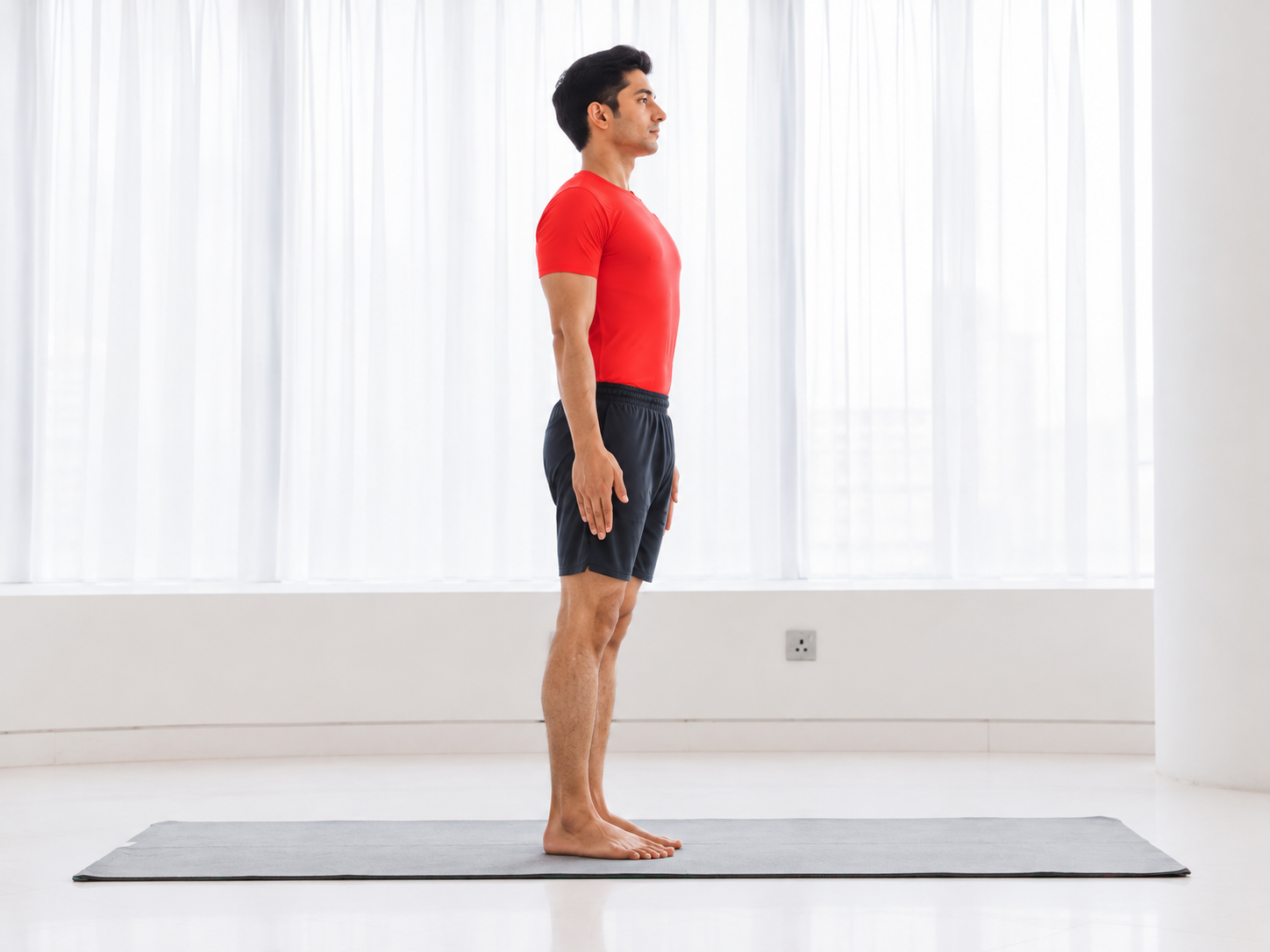
Distribute the weight across both feet, keep the knees active without forcefully locking them, and lengthen through the spine without lifting the chest excessively. The aim is not to create unnecessary rigidity, but to find an alert, balanced and steady position from which movement can begin.
Adho Mukha Svanasana: Downward-Facing Dog
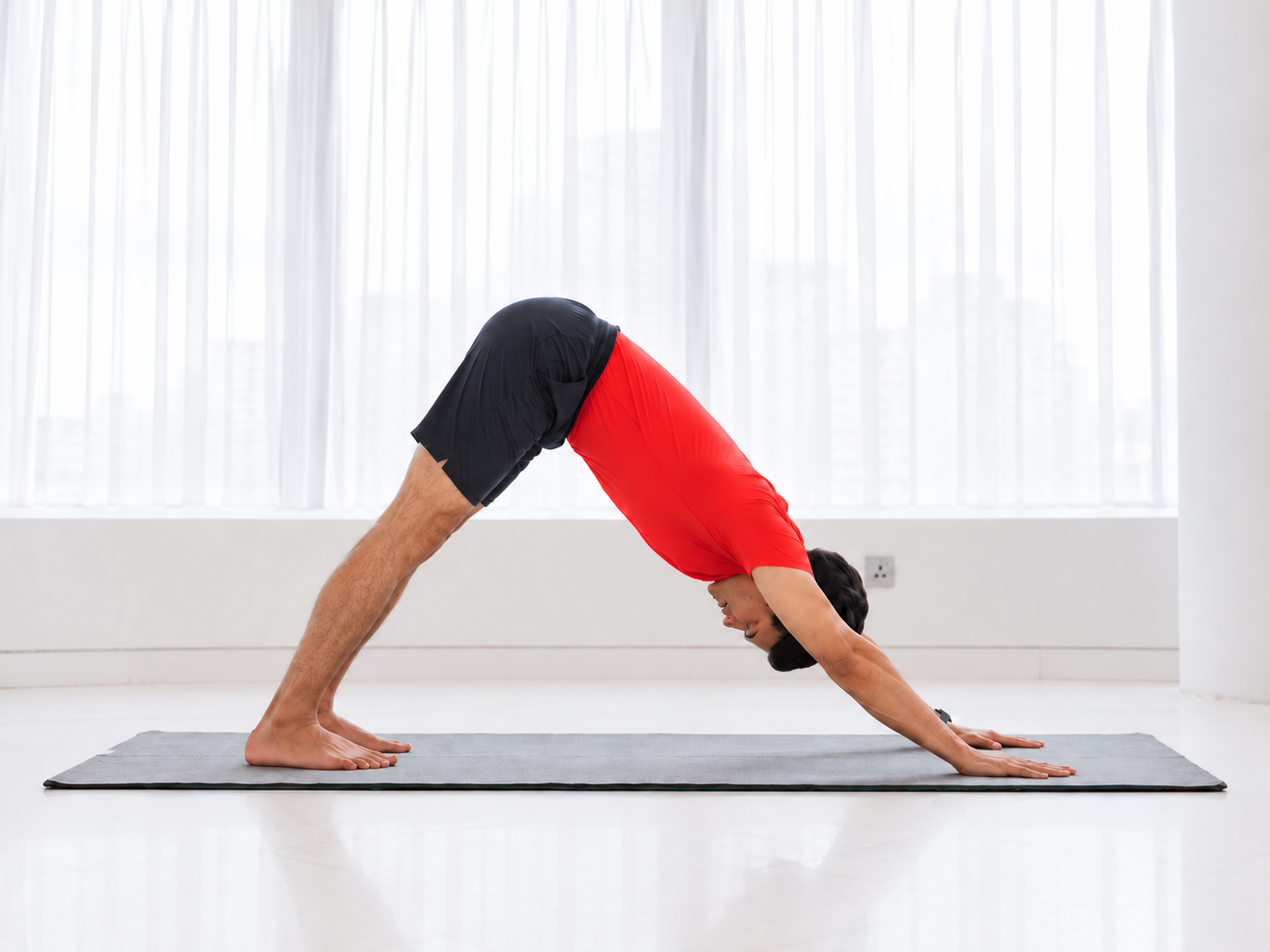
Straight legs and heels touching the floor are not the main goals. If the hamstrings restrict movement at the hips, slightly bending the knees may make it easier to lengthen the spine. Pressing through the hands and maintaining active shoulders can help distribute the load rather than allowing the body to sink passively into the wrists and shoulder joints.
Virabhadrasana II: Warrior II
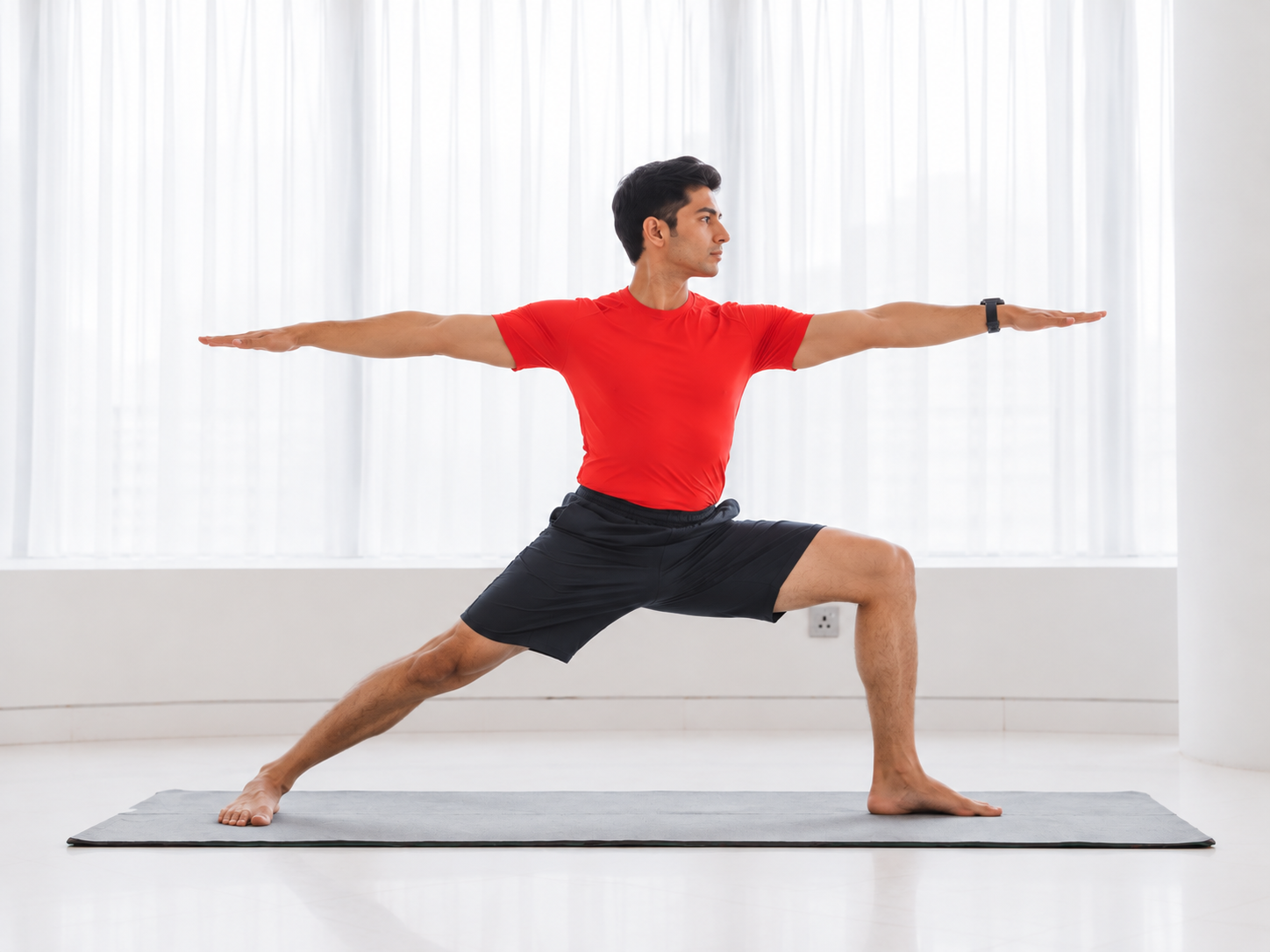
Choose a stance that allows balance and control. Direct the front knee generally towards the toes, keep the front foot grounded and maintain activity through the back leg. The exact stance length and pelvic position will vary. The practitioner should feel muscular work through the legs rather than sharp or localised discomfort inside the knee.
Paschimottanasana: Seated Forward Bend
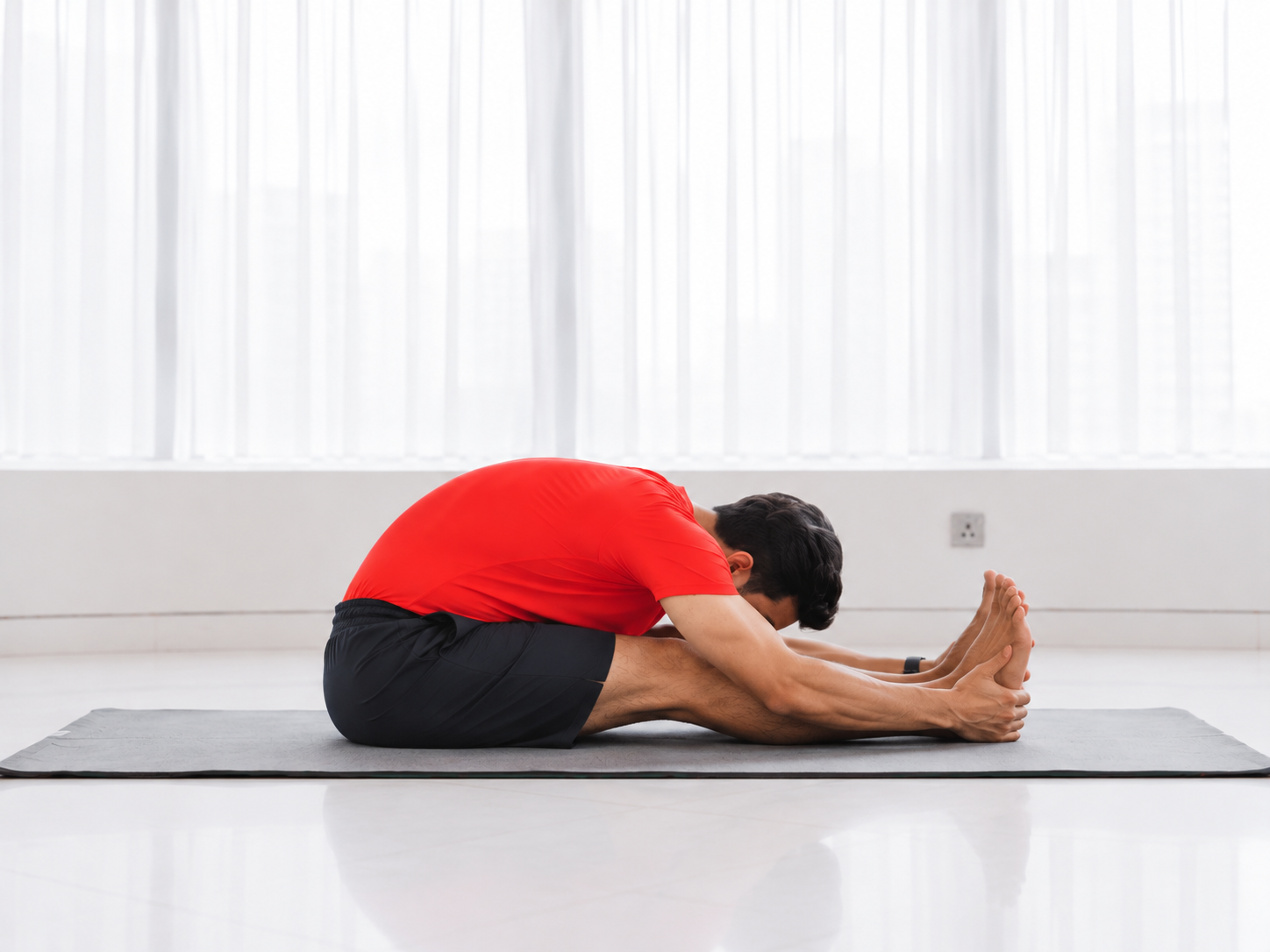
Reaching the feet is not the purpose of a forward bend. Sitting on a folded blanket, bending the knees or using a strap may allow the pelvis to move more freely and reduce the urge to pull forcefully through the back. The movement should be approached progressively and modified when spinal or other health conditions require it.
Urdhva Dhanurasana: Upward-Facing Bow Pose
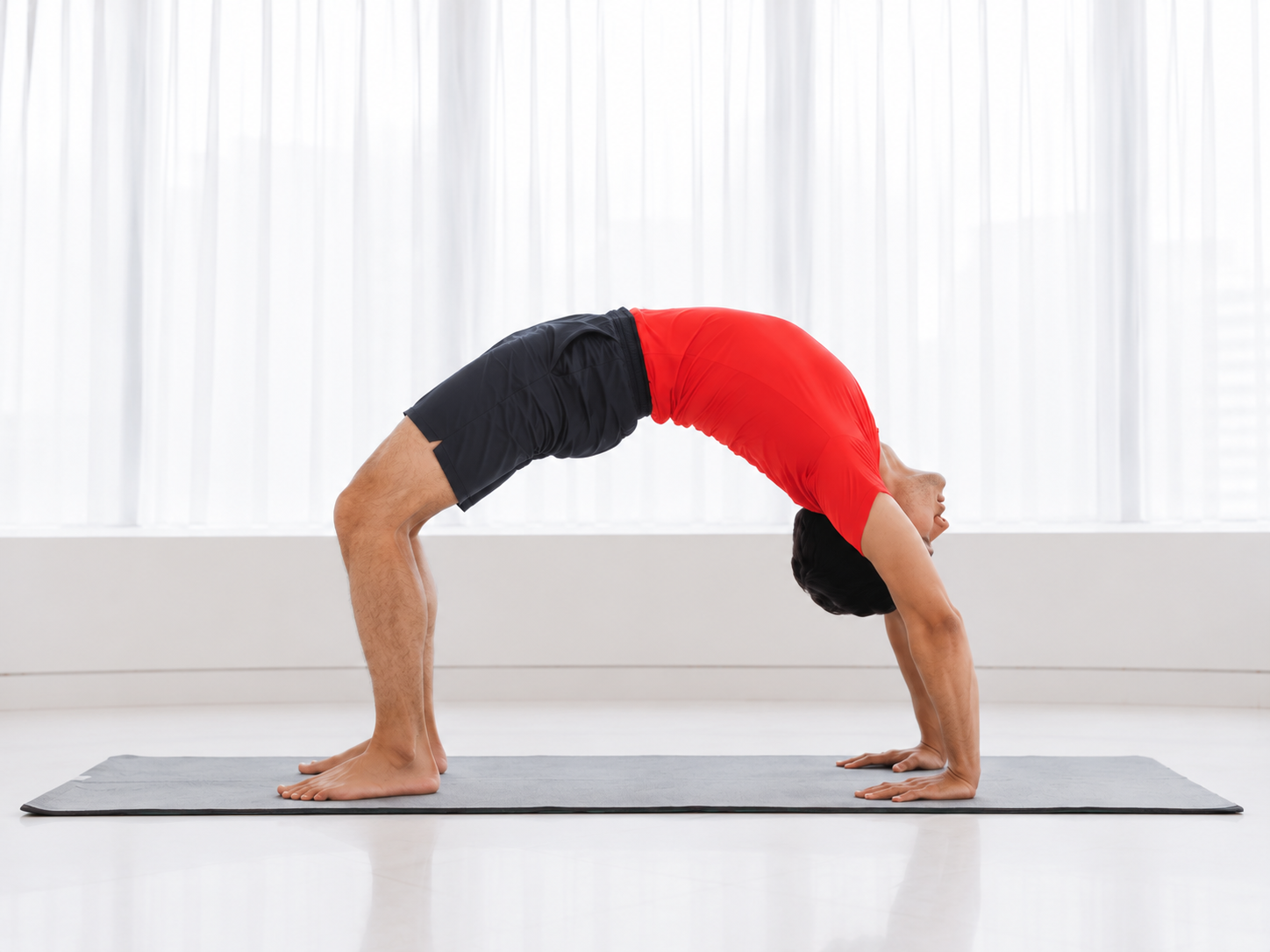
In Urdhva Dhanurasana, the backbend should not come predominantly from the lower back. Mobility through the shoulders and upper back, together with hip extension and active support from the arms and legs, helps distribute the movement more effectively. Rather than pushing for greater depth, focus on creating length, maintaining steady support through the hands and feet, and working within a range that can be controlled comfortably.
Understanding Effort and Pain
Yoga includes effort, and some postures may create a strong sensation in the working muscles. However, not every intense sensation is useful. A manageable stretch or muscular effort may be appropriate, but the practitioner should reduce or leave the position if there is:
- Sharp, pinching, shooting or burning pain
- Pain felt inside a joint
- Numbness or tingling
- Loss of strength or control
- Dizziness, unusual breathlessness or visual disturbance
- Pain that continues or becomes worse after practice
Pain is not proof that an asana is working. It can be a signal that the position, range, load or technique needs attention. Research suggests that yoga can generally be practised safely, but adverse events can occur, particularly with excessive effort, unsuitable practice, unrecognised health conditions or insufficient supervision.
When Practice Needs Individual Modification
Yoga can be adapted for many people, but general instructions cannot account for every medical condition. Additional guidance may be needed during pregnancy or when someone has osteoporosis, glaucoma, uncontrolled high blood pressure, recent surgery, significant joint instability, persistent pain or a diagnosed spinal condition.
- During an uncomplicated pregnancy, appropriately modified activity is generally encouraged. The practice should reflect the stage of pregnancy, the individual’s health and obstetric advice. Prolonged supine exercise may require modification later in pregnancy.
- Most people with osteoporosis can remain active, but repeated or sustained end-range spinal flexion may require adaptation, particularly for those with vertebral fractures or a high fracture risk.
- Head-down positions can increase pressure inside the eye. People with glaucoma should discuss inversions and sustained head-down positions with their eye specialist.
A yoga teacher can adapt the practice, but yoga instruction should complement not replace medical diagnosis or rehabilitation when these are needed.
The Role of an Experienced Yoga Teacher
Even experienced practitioners cannot always observe their own movement clearly. A trained teacher can identify where an asana is losing stability, where effort is being redirected and which modification may be more suitable.
At Unika Yoga, we do not approach alignment as a rigid set of external shapes. We first consider the purpose of the asana and then observe the individual practitioner, their proportions, mobility, strength, experience and any limitations they have shared.
This understanding of movement is also an important part of our yoga education programmes. We explore yoga biomechanics in depth through our 200-Hour Yoga Teacher Training, 100-Hour Advanced Yoga Teacher Training and 300-Hour Yoga Therapy Certification Course, helping students understand how anatomy, movement, alignment and individual differences can inform both practice and teaching.
Sometimes progress means moving further. At other times, it means reducing the range, changing the base, using a prop or learning to remain steady in a simpler variation. The purpose of an adjustment is not to make everyone look the same. It is to help each student practise with greater clarity, control and awareness.
Final Thoughts
Yoga biomechanics is not about reducing yoga to muscles and joints. It gives us a practical way to understand the physical body through which asana is experienced.
When movement is guided by awareness, alignment becomes adaptable rather than rigid, and stability supports mobility rather than restricting it. Practice becomes less about achieving a shape and more about developing clarity, control and a respectful relationship with the body.
Progress in yoga is not measured only by how far we can move. It is also reflected in how well we understand when to continue, when to modify and when to pause.
Practise With Greater Understanding
Explore thoughtfully guided yoga classes at Unika Yoga, centrally located in Singapore. Our teachers support students in developing mobility, strength, alignment and body awareness according to their individual practice.
Frequently Asked Questions
No. Muscular effort in the legs may be expected, but sharp, pinching or persistent knee pain should not be ignored. Leave the pose, review the relationship between the foot, hip and knee, and use a suitable modification. Seek professional assessment if the pain continues.
No. Flexibility is not a requirement for beginning yoga. Mobility, strength, balance, breath awareness and concentration can all develop gradually through consistent practice.
There are sound biomechanical principles, but their application varies. Bone structure, proportions, mobility, strength and health history influence how an asana should be practised. Good alignment is stable, purposeful and appropriate for the individual.
No. Constantly gripping the abdomen or holding the breath can create unnecessary tension. Core engagement should respond to the movement while allowing the breath to continue comfortably.
It depends on the cause, severity and duration of the pain. Many practices can be modified, but persistent, severe or radiating pain should first be professionally assessed. The teacher should be informed before class.