
What a 200-Hour Yoga Teacher Training Truly Teaches (Not Just Asanas)
A 200-hour yoga teacher training course is often seen as the starting point for those who want to understand yoga in a structured way. While many people expect it to focus mainly on physical postures, the scope of the training is much wider.
The course introduces yoga as a complete system that includes movement (asana), breath regulation (pranayama), meditation (dhyana), yogic philosophy, anatomy, physiology and biomechanics, subtle practices such as mudra and bandha, and structured teaching methodology. Rather than teaching poses in isolation, it explains how different aspects of yoga work together and why each one matters.
What Is a 200-Hour Yoga Teacher Training Course Really About?
A 200-hour yoga teacher training (YTT) is a structured educational program designed to introduce yoga as a complete system, not just a physical practice.
Is it only about learning yoga poses?
No. While asana practice is included, a 200-hour Yoga Teacher Training focuses on understanding how movement, breath, and attention function together within a structured system. The aim is to develop clarity, safe practice principles, and foundational teaching competence — not just physical performance.
What do “200 hours” actually include?
The 200 hours are divided between practical training, theoretical study, and supervised teaching practice. This structure ensures students gain both experiential depth and the foundational knowledge required for responsible instruction.
Why is this training considered foundational?
It provides the base knowledge required to practice safely, understand yogic principles, and guide others responsibly.
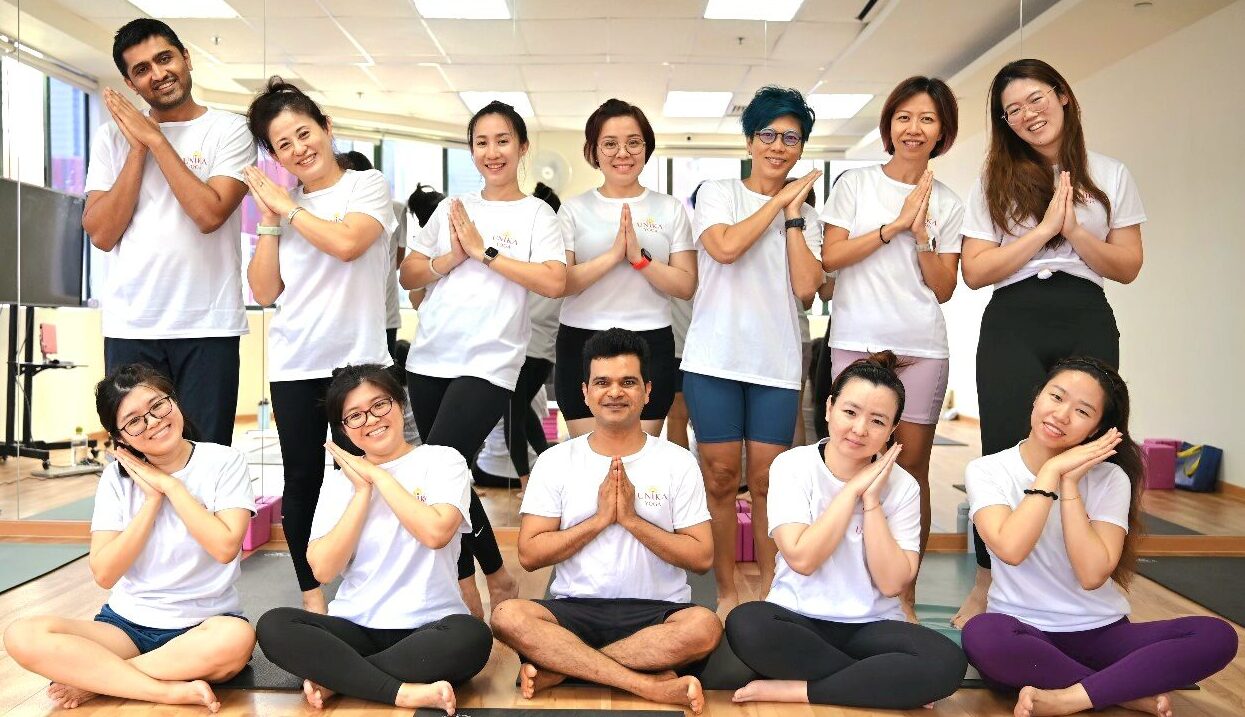
At Unika Yoga, the course is structured to balance physical practice with conceptual understanding, so students can see how different aspects of yoga connect.
Why Are Asanas Only a Small Part of Yoga Teacher Training?
Modern yoga styles often focus on physical fitness. Traditional yoga does not.
What is missing if yoga is taught only as exercise?
When yoga is taught only as physical exercise, its regulatory depth is reduced. Without breathwork and attentional awareness, movement remains mechanical rather than integrative, limiting its impact on nervous system balance and emotional stability.
How traditional yoga views body, mind, and breath
Traditional yoga views body, breath, and mind as interconnected processes. Movement influences breathing mechanics, breath modulates autonomic nervous system activity, and attention shapes mental responses. Practice therefore coordinates all three rather than isolating the body.
Common myths about yoga teacher training
- You must be very flexible
- It is only for performers or athletes
- Teaching equals demonstrating difficult poses
A 200-hour YTT challenges these assumptions early in the course.
What Yogic Philosophy Do You Learn in a 200-Hour YTT?
Yoga philosophy provides the conceptual foundation behind practice.
What is Hatha Yoga in this context?
Hatha Yoga is a practical system of physical and breath-based techniques designed to prepare the body and mind for deeper awareness. It emphasizes balance in effort, stability, and attention, but functions as a methodology rather than a philosophical doctrine.
Do you study ancient yoga texts?
Yes. Foundational ideas from texts such as the Yoga Sutras are introduced in simplified form to explain ethical principles, mental patterns, and attention training.
How philosophy helps in real life and teaching
Philosophy helps teachers:
- Understand why practices are done
- Respond calmly in challenging situations
- Teach with clarity rather than imitation
At Unika Yoga, philosophy is taught in a way that connects ancient ideas with modern experiences, avoiding heavy terminology.
How Does Anatomy, Physiology & Biomechanics Go Beyond Stretching?
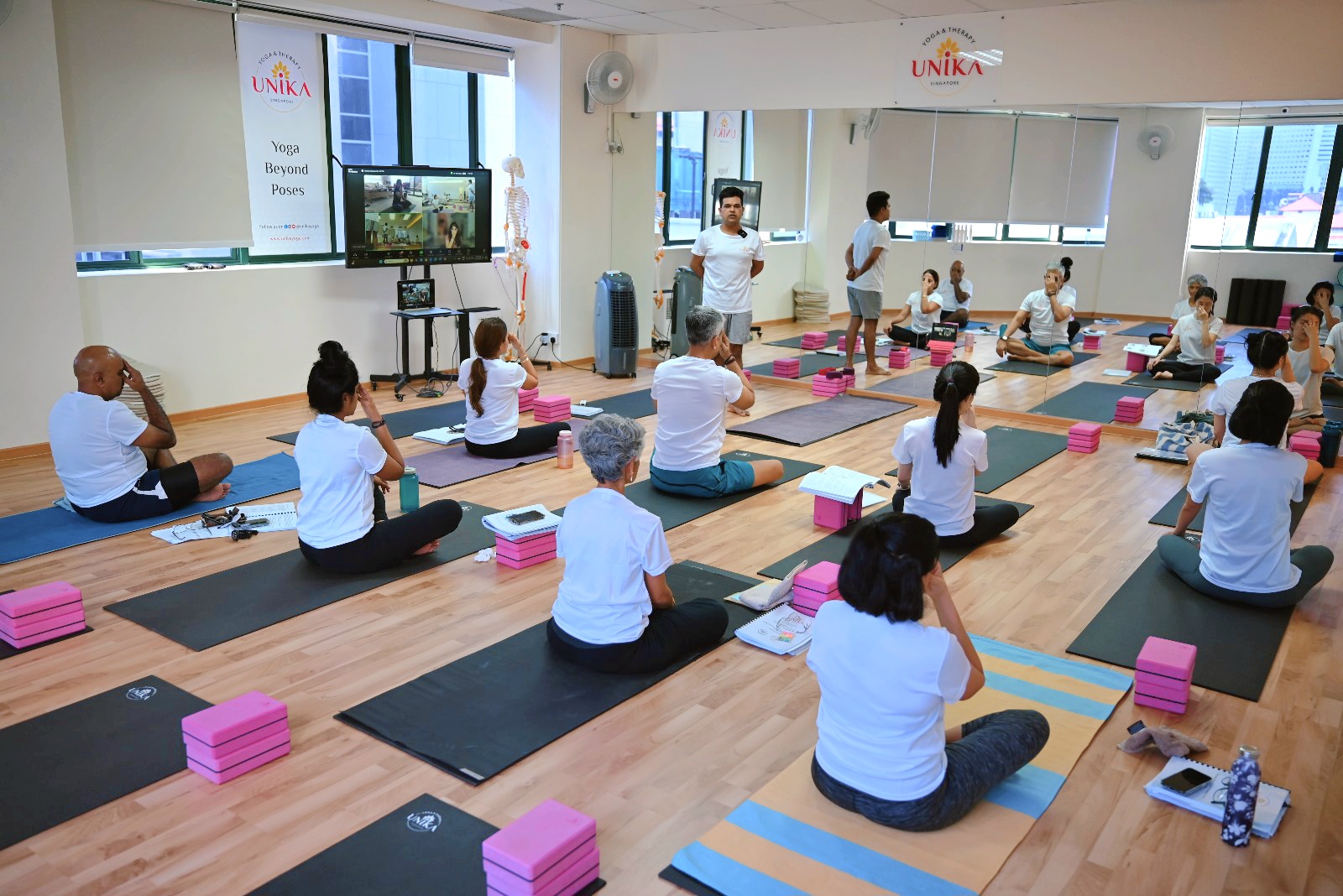
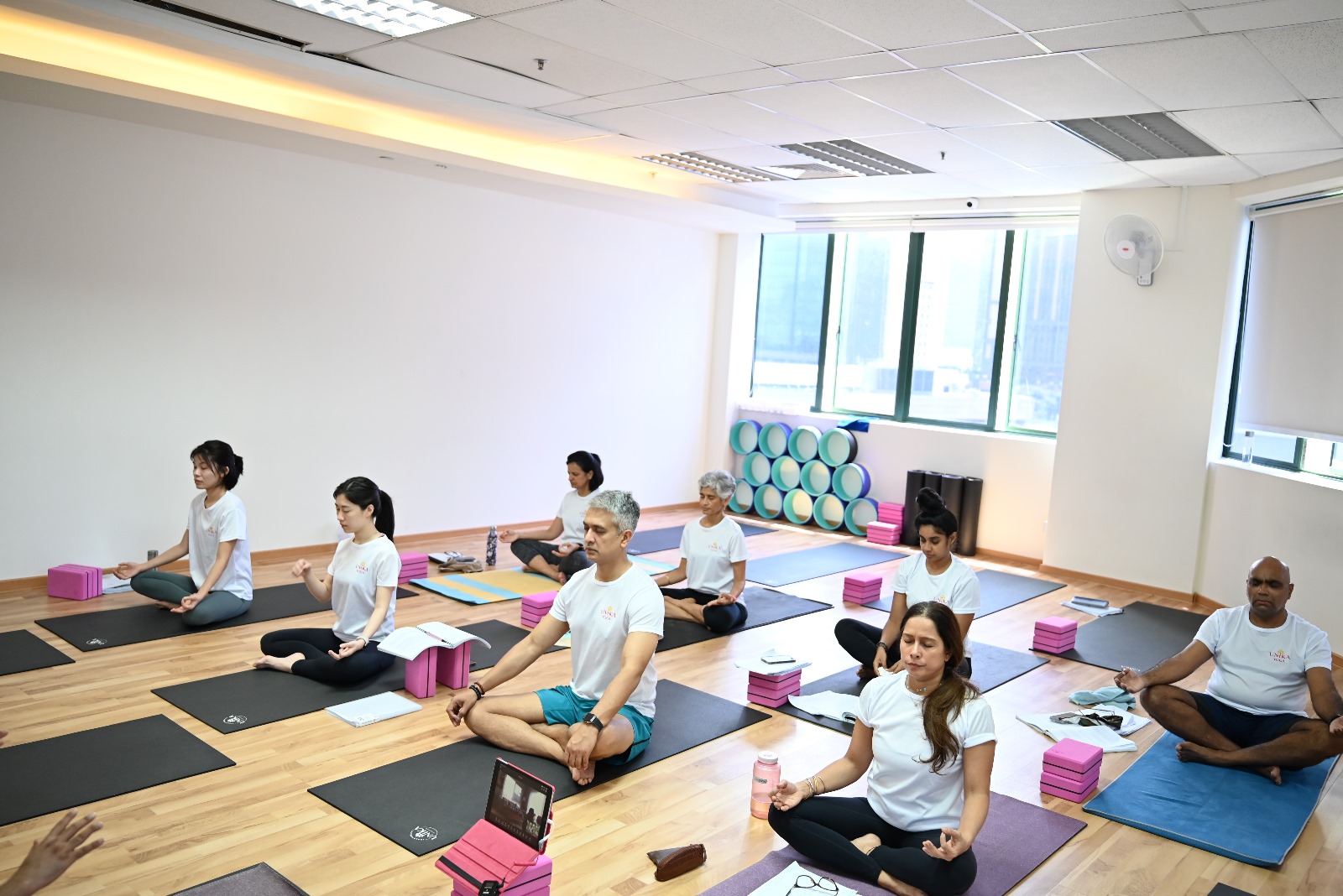
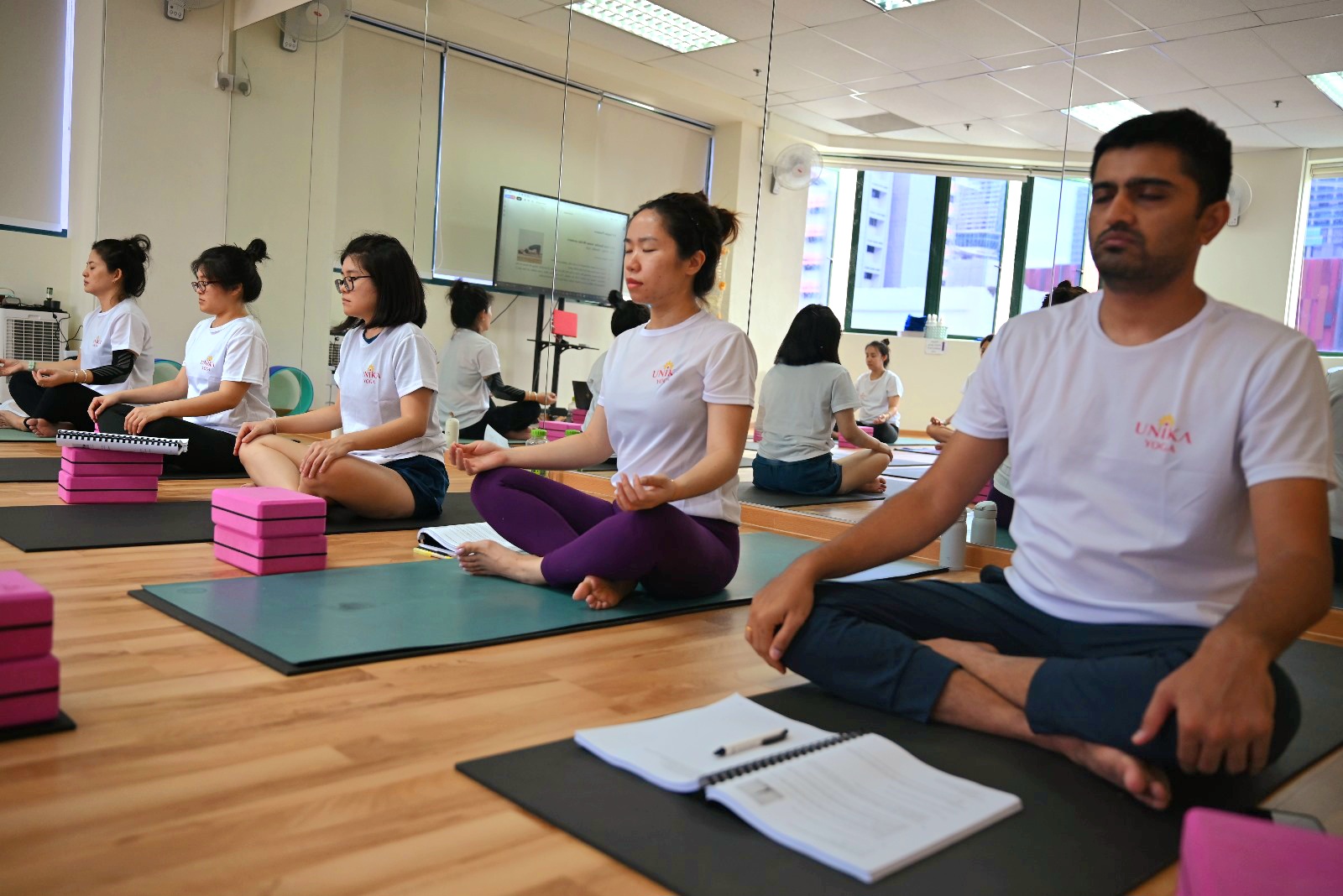
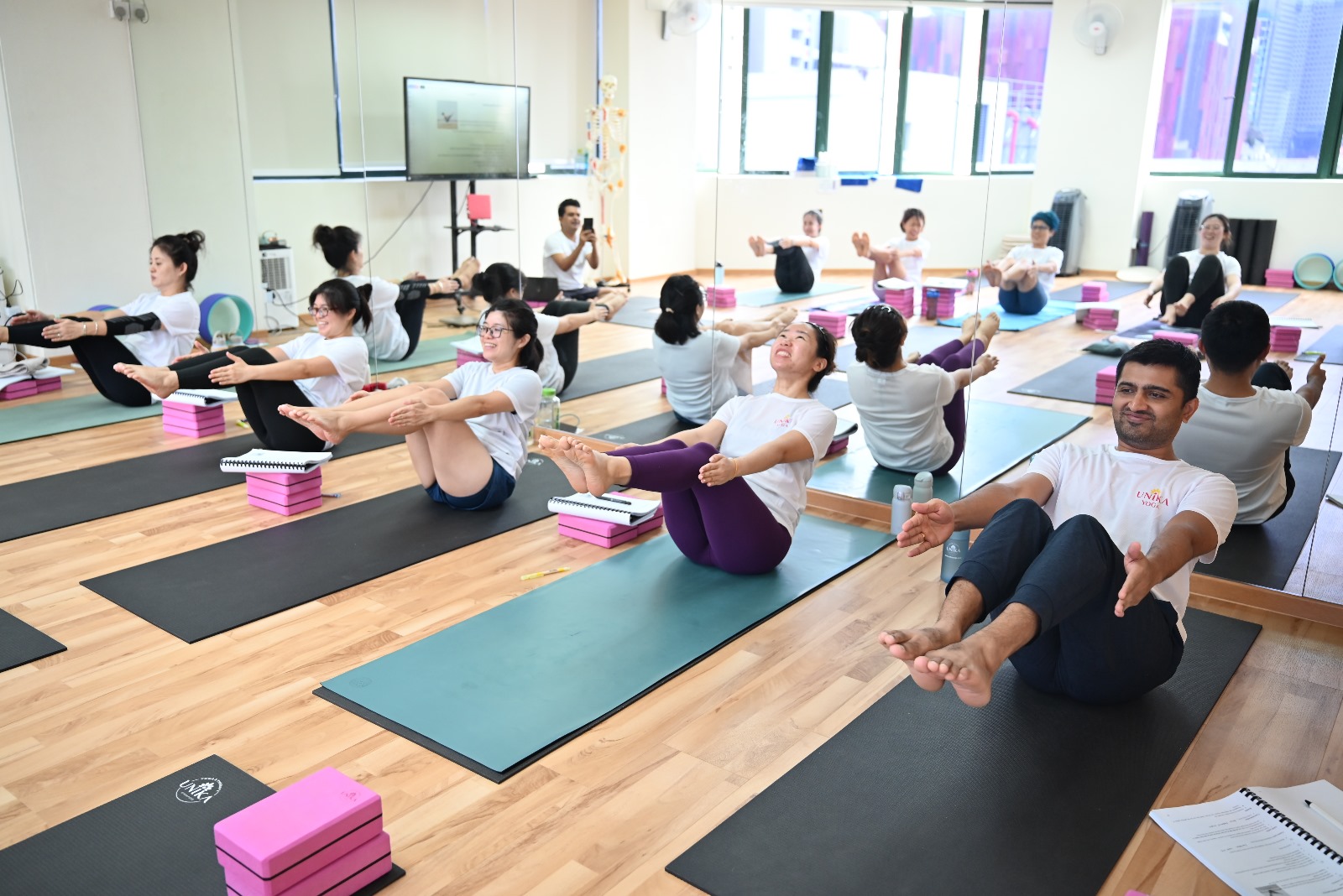
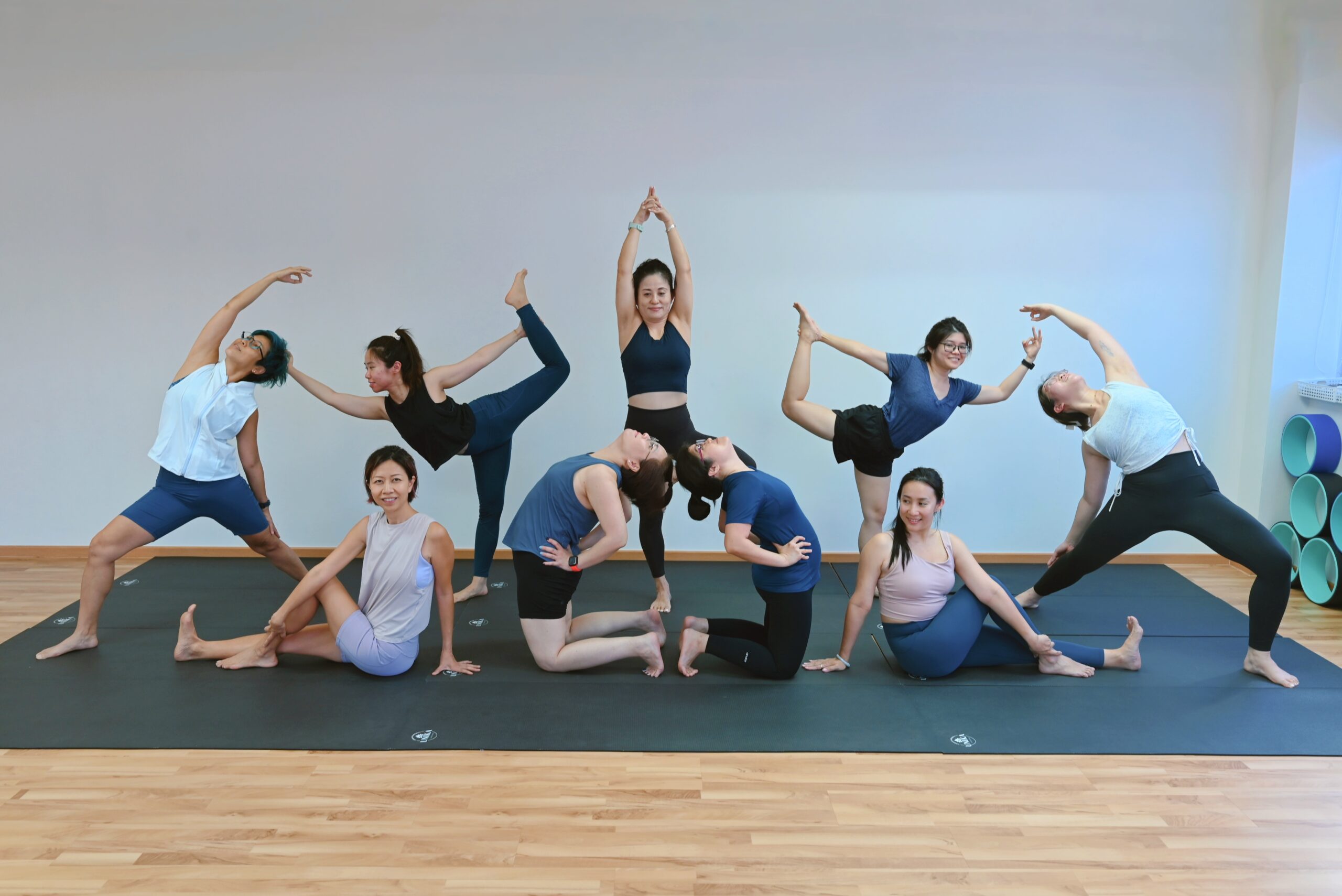
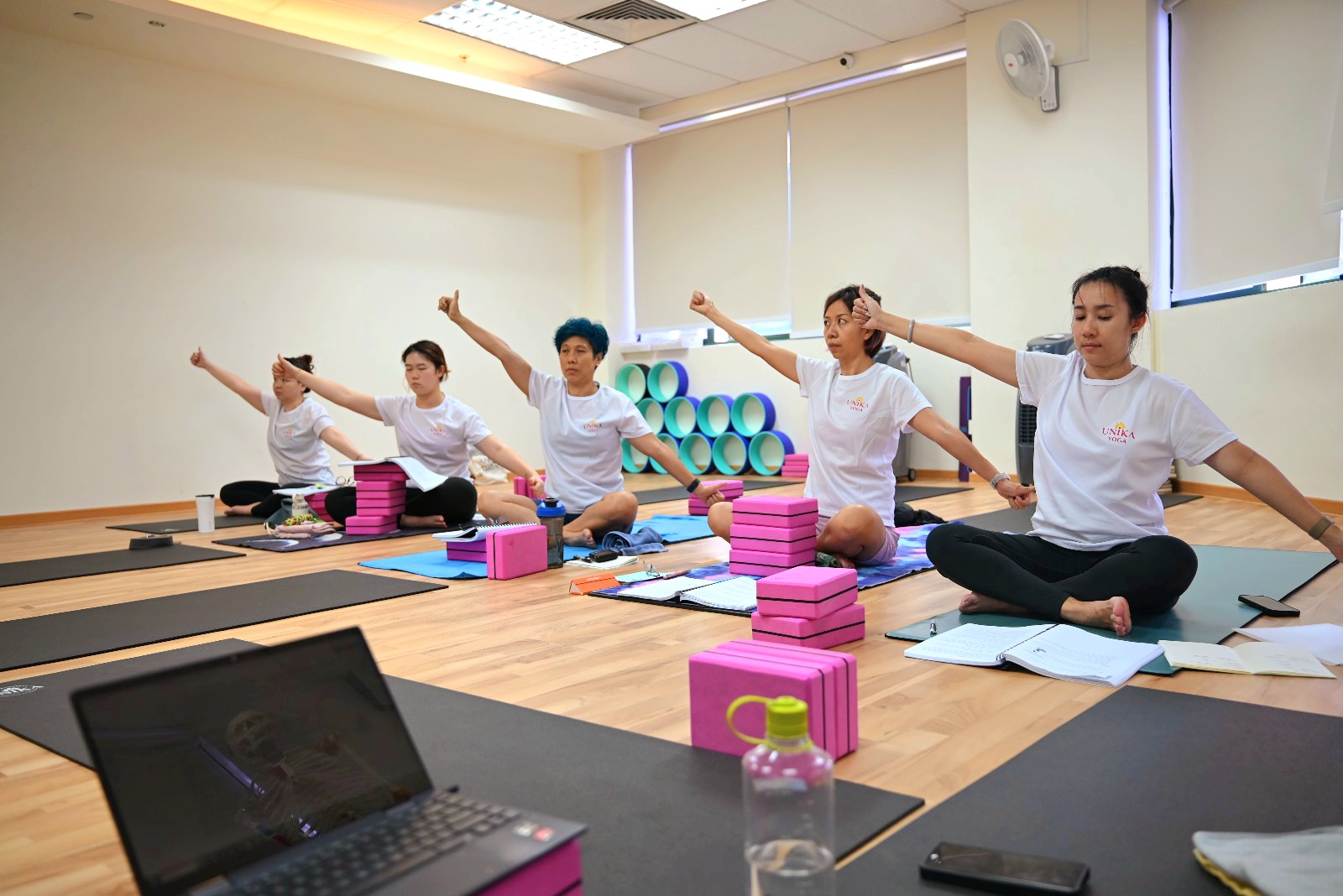
Anatomy is one of the most practical parts of yoga teacher training.
Why anatomy and biomechanics are crucial for safe teaching
Every body differs in structure, mobility, and load tolerance. Understanding joint mechanics, muscular function, and spinal movement allows teachers to guide postures safely rather than relying on fixed alignment cues.
Anatomical and biomechanical knowledge helps teachers:
- Recognize movement limitations
- Avoid excessive compression or strain
- Offer appropriate modifications
- Sequence classes progressively
What physiological systems are covered?
Training usually includes:
- Musculoskeletal system
- Nervous system basics
- Respiratory mechanics
- Cardiovascular system
- Digestive system
- Endocrine system
Students learn how core components of yoga influence these systems — movement supports joint and muscular function, breathwork modulates autonomic nervous system activity, and meditation and attentional awareness contribute to stress regulation, hormonal balance, and emotional stability.
How does this knowledge help prevent injuries?
Anatomical awareness helps teachers identify when a joint is approaching its functional limit, distinguish between safe muscular effort and harmful compression, and adjust load accordingly. This reduces the risk of strain, overextension, and repetitive stress during practice.
What Is the Role of Pranayama & Breathwork in YTT?
Breathwork is central to yoga training.
Why breath is more important than posture
Breathing patterns directly influence stress levels and focus. A stable breath supports both movement and stillness.
What types of pranayama are taught?
Training typically includes preparatory breathing practices and foundational pranayama techniques categorized as balancing, calming, vitalising, cooling, and resonating. Emphasis is placed on slow diaphragmatic breathing, controlled exhalation, and gentle breath regulation, introduced progressively and safely.
How breathwork affects mental health and energy
Pranayama modulates autonomic nervous system activity. Slow, controlled breathing enhances parasympathetic response and reduces stress reactivity, supporting emotional regulation, steadier attention, and more balanced energy levels.
What Are the “Subtle Practices” Taught Beyond Asanas?
Subtle practices are internal techniques that influence awareness and breath regulation.
What are Mudra, Bandha, and Kriya?
• Mudra: Gestures that direct attention and influence breath or energy
• Bandha: Gentle internal muscular engagements that support posture and breathing
• Kriya: Structured cleansing or awareness practices that bridge physical and subtle yoga
Why most yoga classes skip these practices?
They require explanation, patience, and guidance, which is difficult in short group classes.
How these tools deepen personal practice
They help practitioners experience yoga beyond movement, supporting focus and internal awareness.
Do You Learn Meditation in a 200-Hour Yoga Teacher Training?
Meditation is taught as a practical skill.
Is meditation session a theory or practical?
Both. Students first learn what meditation is, its purpose, principles, and methods (theory). They then apply this understanding through regular guided meditation practice (practical).
How meditation supports emotional balance
Meditation trains observation without reaction, which helps manage stress and emotional responses.
Daily mindfulness integration for teachers
It is the ability to weave brief awareness practices into teaching and personal routines, helping teachers begin classes with clarity and presence.
What does this involve?
• Body: simple grounding or preparatory awareness
• Breath: gentle regulation or observation
• Mind: short centering or focus practices
How Does a 200-Hour YTT Prepare You to Teach, Not Just Practice?
Teaching yoga requires skills beyond personal practice.
What teaching methodology means in yoga
It includes:
- Class structure
- Clear verbal instruction
- Safe sequencing
How to cue, modify, and sequence classes
Students practice giving instructions, offering alternatives, and adapting classes for different needs.
Teaching students of different ages and abilities
Training emphasizes inclusivity and adaptability rather than fixed routines.
At Unika Yoga, classroom-based practice teaching is used to build confidence gradually.
What Professional Skills Are Yoga Teachers Expected to Have?
Yoga teaching carries responsibility.
Ethics, inclusivity, and responsibility
Teachers are trained to respect boundaries, avoid harm, and create non-judgmental spaces.
Creating safe and welcoming classes
This includes language use, awareness of limitations, and sensitivity to diverse backgrounds.
Building trust with students
Consistency, clarity, and ethical conduct are emphasized throughout training.
How Does a 200-Hour Yoga Training Support Personal Transformation?
Many students notice changes beyond physical ability.
Emotional awareness and self-reflection
Regular practice and study encourage observing habits, reactions, and stress patterns.
Discipline, confidence, and clarity
Following a structured routine over several weeks builds consistency and self-trust.
Why many students say the course changes their life
The combination of physical practice, reflection, and learning often leads to lasting perspective shifts.
Who Should Choose a 200-Hour Yoga Teacher Training?
This training is not limited to one type of person.
Is it only for aspiring teachers?
No. Many participants join to deepen personal practice without plans to teach.
Can wellness professionals benefit?
Yes. Physiotherapists, therapists, and fitness professionals often use the knowledge to complement their work.
Is it suitable for beginners?
Yes, provided there is interest in learning and regular practice.
Why Choose Unika Yoga for Your 200-Hour Teacher Training?
Different schools emphasize different aspects.
What makes Unika Yoga’s approach different?
The focus is on clarity, safety, and integration of traditional concepts into modern life.
Importance of experienced teachers and mentorship
Learning from experienced instructors helps students understand not just “how,” but “why.”
Ongoing support beyond certification
Graduates continue to have access to guidance and learning opportunities after completing the course.
Is Yoga Alliance Certification Important?
Certification provides a standard reference.
What certification actually means
It shows that the course meets internationally recognized training guidelines.
International recognition benefits
Graduates can teach in different countries or online with greater credibility.
Teaching opportunities after certification
Many studios and platforms require training aligned with Yoga Alliance standards.
Is 200-Hour Yoga Teacher Training Worth It?
A 200-hour yoga teacher training goes beyond teaching postures. It helps participants understand yoga as a structured system that integrates movement, breath, awareness, and ethical responsibility. This foundation supports safer practice, clearer instruction, and steady personal development.
At Unika Yoga, we design our 200-hour teacher training to function as a long-term learning reference rather than a one-time certification. We guide students through the practical and theoretical aspects of yoga in a way that supports both personal practice and future teaching.
To learn more, book a free course preview with us at 83007895.