Effortless Relaxation: Discover the Power of Sound Healing
Do you feel tired even after resting?
Do your thoughts keep running when you try to slow down? You may sit quietly, but your mind continues to replay conversations, plan tasks, or worry about what comes next.
Many people experience this kind of constant mental activity. It often leads to shallow breathing, tight muscles, and difficulty falling asleep. Even when time is set aside for relaxation, the body does not fully switch off.
Sound healing is a simple approach that allows the body to relax without effort. Instead of trying to control thoughts or follow techniques, you listen to carefully curated sounds that guide the mind and body into a calmer state.
Sessions offered at spaces like Unika Yoga provide a structured environment where this process can take place naturally. This article explains how sound healing works and why it is often described as an effortless way to relax.
Why Is It So Hard to Relax Today?
Modern routines often involve continuous stimulation.
Notifications, screens, and daily responsibilities keep the mind active throughout the day. Even after work ends, the brain may remain alert.
This constant activity can affect how the body feels. Muscles may stay slightly tense. Breathing may become shallow. The mind may find it difficult to settle.
Traditional relaxation methods, such as sitting quietly or trying to meditate, do not always feel easy. For some people, the effort to “relax” can create more frustration.
As a result, the body rarely enters a deeply restful state. This is where supportive practices like sound healing may offer an alternative approach.
What Is Sound Healing?
Sound healing is a practice that uses sound vibrations to support relaxation and balance.
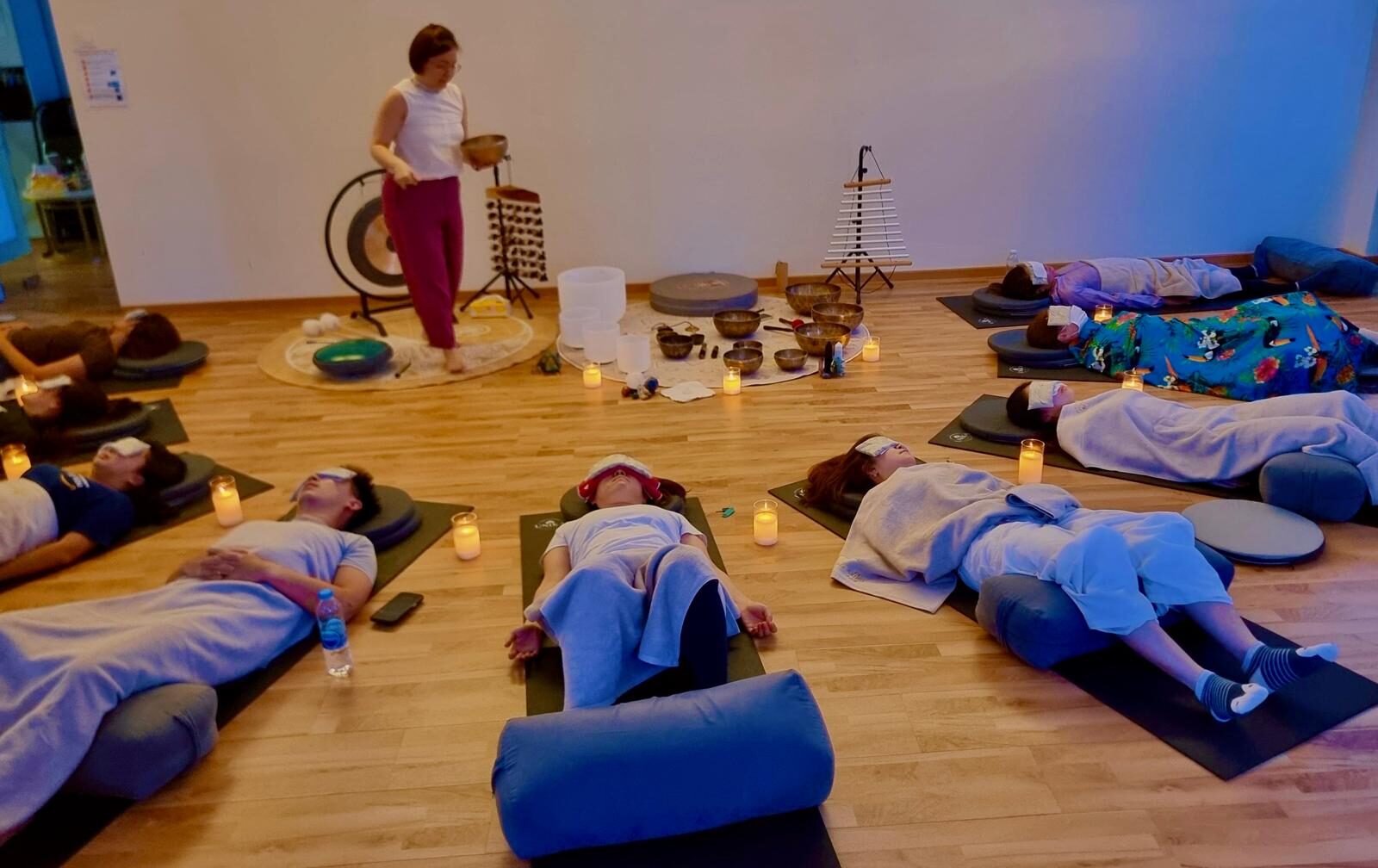
During a session, instruments such as Tibetan singing bowls, crystal singing bowls, gongs, tongue drum, and chimes are played in a slow and controlled way. These instruments produce sustained tones rather than melodies.
Participants usually lie down comfortably while listening to the sounds.
Unlike music, which is often designed for entertainment, sound healing focuses on creating specific frequencies that interact with the body.
The purpose is not to analyze or follow the sound, but simply to experience it. Over time, these vibrations may help the body shift into a more relaxed state, supporting brainwave entrainment into slower Alpha and Theta states, which are associated with relaxation and restorative processes.
How Does Sound Healing Create Relaxation?
Sound healing works by influencing both attention and the nervous system.
When the mind is busy, thoughts often move quickly from one topic to another. Sound provides a steady point of focus, which can help reduce mental activity.
As attention shifts toward sound, the body may begin to relax naturally.
Breathing often becomes slower and deeper. The heart rate may reduce. Muscles may begin to release tension.
Sound vibrations can also be felt physically as tingling sensations, especially with lower-frequency instruments. These sensations may support the release of tight areas in the body.
In addition, sound healing may encourage the brain to move into slower brainwave states associated with calmness and rest.
These changes happen gradually and naturally, without requiring active effort.
What Happens During a Sound Healing Session?
A typical session is simple and structured.
Participants lie down on a mat, often with cushions, bolsters, blankets and eye pilows for support. The environment is quiet and cozy, with soft lighting to reduce distractions.
The session usually begins with a few moments of stillness. The facilitator may guide participants to settle into a comfortable position.
Sound is then introduced gradually. Instruments are played in layers, creating a continuous flow of tones. Participants are encouraged to rest and observe their experience.
Some people remain aware throughout the session. Others may drift into a light sleep or a dream-like state.
At the end, there is usually a short period of silence before returning to regular activity.
At Unika Yoga, sessions are conducted in a calm setting to support this uninterrupted experience.
Why Is Sound Healing Considered “Effortless”?
Many relaxation techniques require some level of effort.
Meditation, for example, often involves focusing attention or managing thoughts. This can feel challenging for beginners.
Sound healing is different because it does not require active participation.
You do not need to control your breathing, hold a posture, or concentrate in a specific way. The sound itself becomes the focus.
This makes the practice accessible to a wide range of people, including those who find traditional relaxation methods difficult.
The body is guided into relaxation through listening rather than doing.
For this reason, sound healing is often described as an effortless relaxation method.
What Are the Benefits of Sound Healing?
Sound healing may support several aspects of wellbeing.
One common benefit is stress reduction. As the body relaxes, tension may decrease and breathing may become more natural.
Improved sleep is another reported outcome. Deep relaxation during sessions may help the body prepare for rest later in the day.
Some individuals notice reduced physical tension, particularly in areas such as the shoulders or back.
Mental clarity may also improve. When the mind has time to slow down, it may feel easier to focus afterward.
Emotional balance is another possible benefit. The quiet and supportive environment allows individuals to step away from daily pressures.
These effects may vary from person to person and often develop with regular practice.
Who Can Benefit From Sound Healing?
Sound healing can be explored by different groups of people.
Overworked professionals may use it as a way to disconnect from daily responsibilities.
Individuals experiencing restlessness or difficulty relaxing may find the passive nature of the practice helpful.
People with sleep-related concerns may explore it as part of a relaxation routine.
Those who feel uncomfortable with meditation may find sound healing easier to engage with, as it does not require focused effort.
It may also appeal to individuals looking for non-invasive approaches to stress management.
Because the practice involves minimal physical activity, it is accessible to most people.
How Often Should You Try Sound Healing?
The frequency of sessions can vary depending on individual needs.
Some people attend a session occasionally to unwind during a stressful period.
Others include sound healing as part of a regular wellness routine, attending weekly or biweekly sessions.
The effects may become more noticeable with consistency. Regular exposure to deep relaxation can help the body adapt to calmer states more easily.
However, even a single session may provide a sense of rest and mental clarity.
Finding a frequency that fits your schedule and comfort level is often the most practical approach.
Where Can You Experience Sound Healing?
The environment plays an important role in sound healing.
A quiet and comfortable space helps reduce distractions and supports relaxation. The quality of sound and the experience of the facilitator also influence the session.
At Unika Yoga, sound healing sessions are conducted in a conducive and supportive environment. The focus is on creating a steady flow of sound that allows participants to settle into a relaxed state at their own pace.
With guided sessions and a comfortable setup, individuals can experience sound healing without needing prior knowledge or preparation.
Is Sound Healing Right for You?
Sound healing can be a suitable option if you are looking for a gentle and low-effort way to relax.
It may be helpful for those who feel mentally overstimulated, find it difficult to unwind, or are exploring simple methods to support rest and balance.
Unlike practices that require focus or physical effort, sound healing allows you to simply lie down and experience the session.
If you are curious about trying it in a structured and guided setting, you can explore sound healing sessions at Unika Yoga to see how it fits into your routine.