How Sound Bath Helps You Slow Down: A Guide for the Busy Modern Professional
Your calendar is booked three weeks in advance. Notifications ping every 30 seconds. Your to-do list has a to-do list. And somewhere between the morning standup and the evening deadline, you realize you haven’t actually sat down to think in days.
This is the reality of being a modern professional. Your value is measured in output, responsiveness, and constant availability. But there’s a cost to this pace—and your nervous system is paying it.
The Speed Trap: Why Modern Professionals Are Always Running
The modern workplace doesn’t just demand speed; it celebrates it. Fast response times signal competence. Multitasking looks like ambition. Staying late shows commitment. The implicit message is clear: the faster you go, the more you’re worth.
But here’s what neuroscience reveals: your brain wasn’t built for this.
Your nervous system has two modes:
- Sympathetic (fight-or-flight): useful when you’re facing actual danger, but chronically activated by back-to-back meetings, email overload, and deadline pressure
- Parasympathetic (rest-and-digest): where healing, creativity, and deep thinking happen—but where most modern professionals rarely spend time
When you’re stuck in sympathetic overdrive for months or years, the cost compounds:
- Your decision-making suffers (stress narrows focus and limits perspective)
- Your creativity tanks (innovation requires a relaxed mind)
- Your relationships deteriorate (you’re too depleted to be present)
- Your health declines (chronic stress accelerates aging and weakens immunity)
- Your productivity paradoxically decreases (burnout kills efficiency)
The professionals who’ve figured out how to actually slow down aren’t working less—they’re working smarter. And one of the most effective tools they’ve discovered is sound bath.
What Sound Bath Actually Is (And Isn't)
Sound bath often gets lumped together with meditation apps, spa music, or yoga relaxation. But it’s fundamentally different.
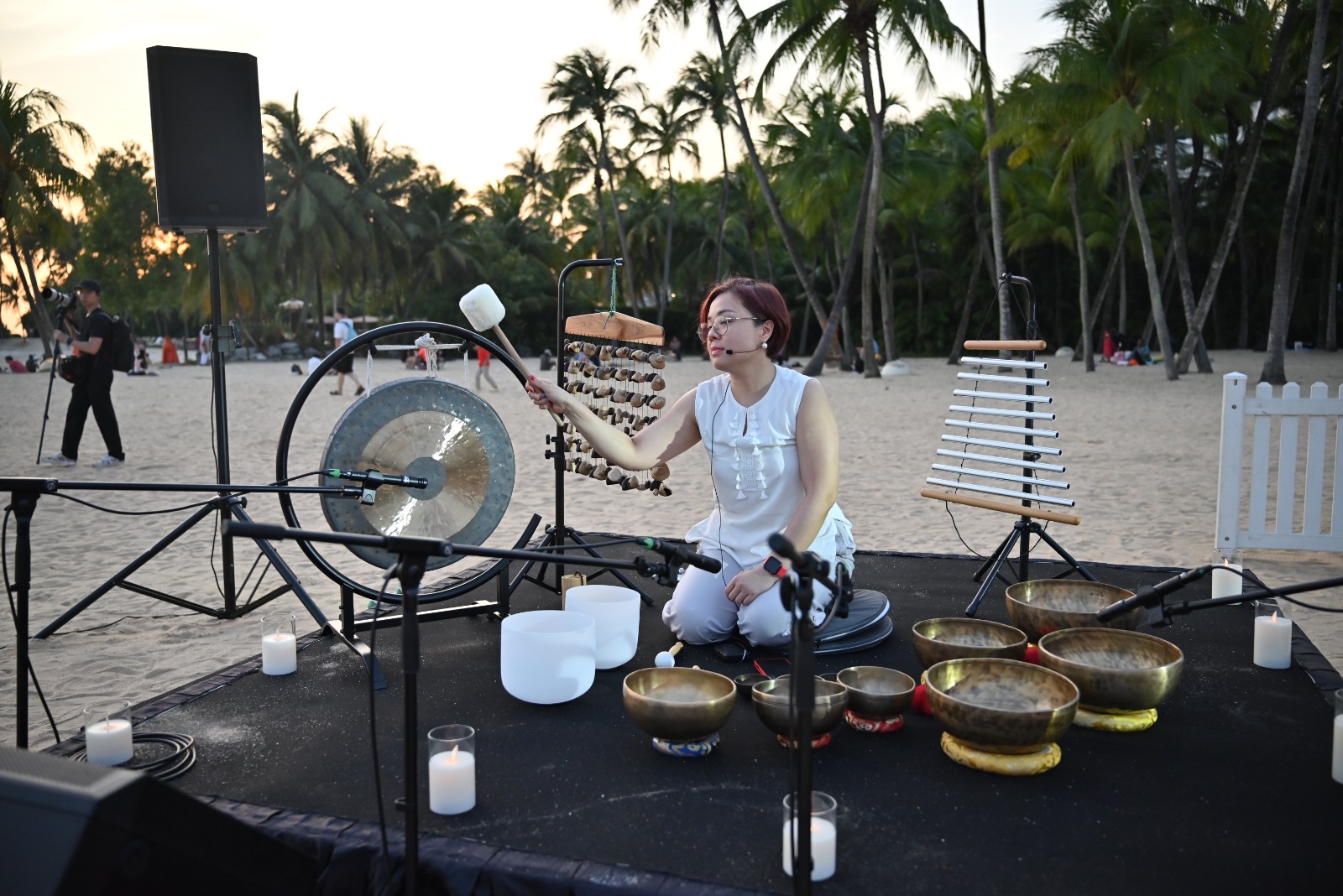
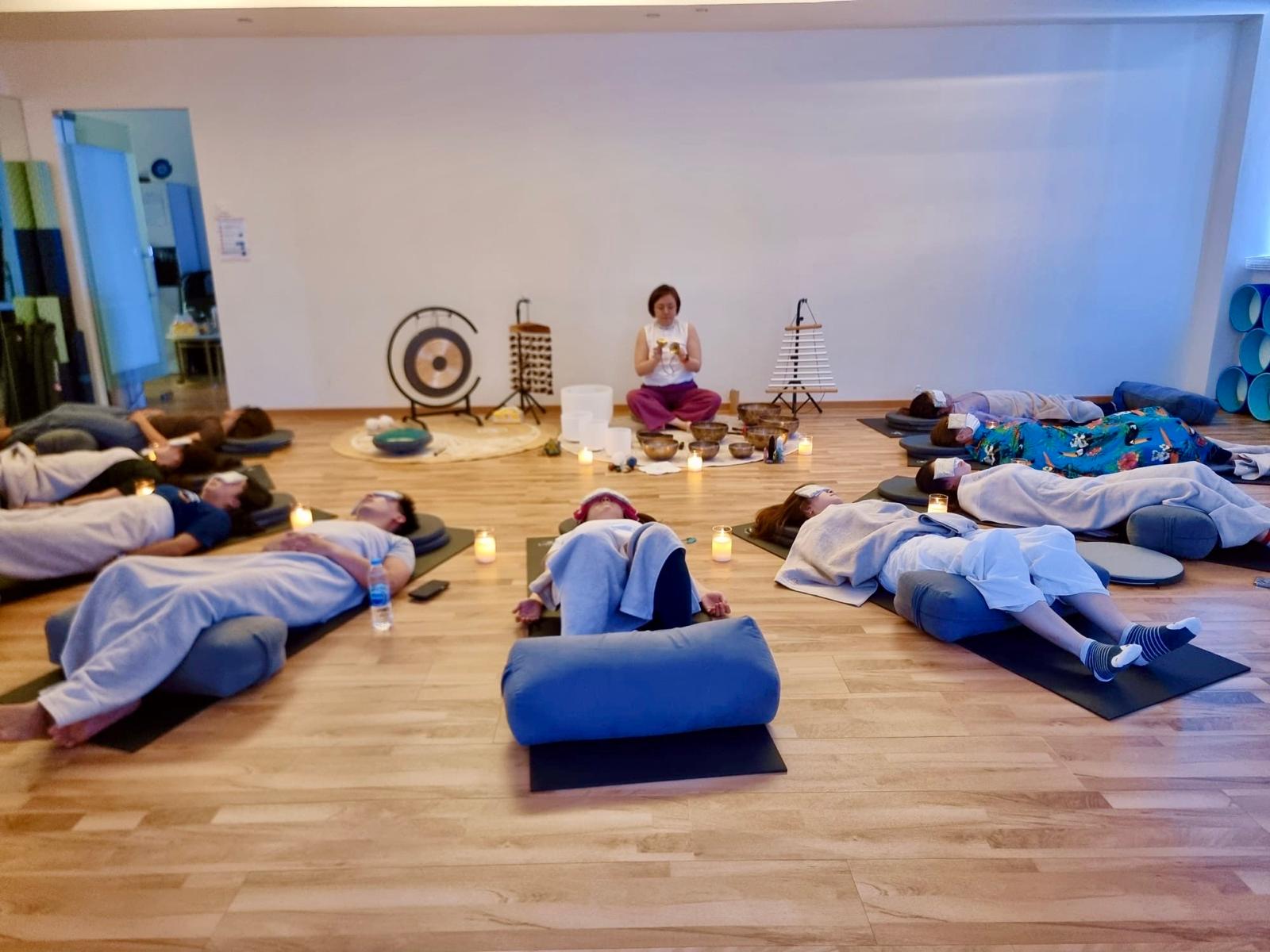
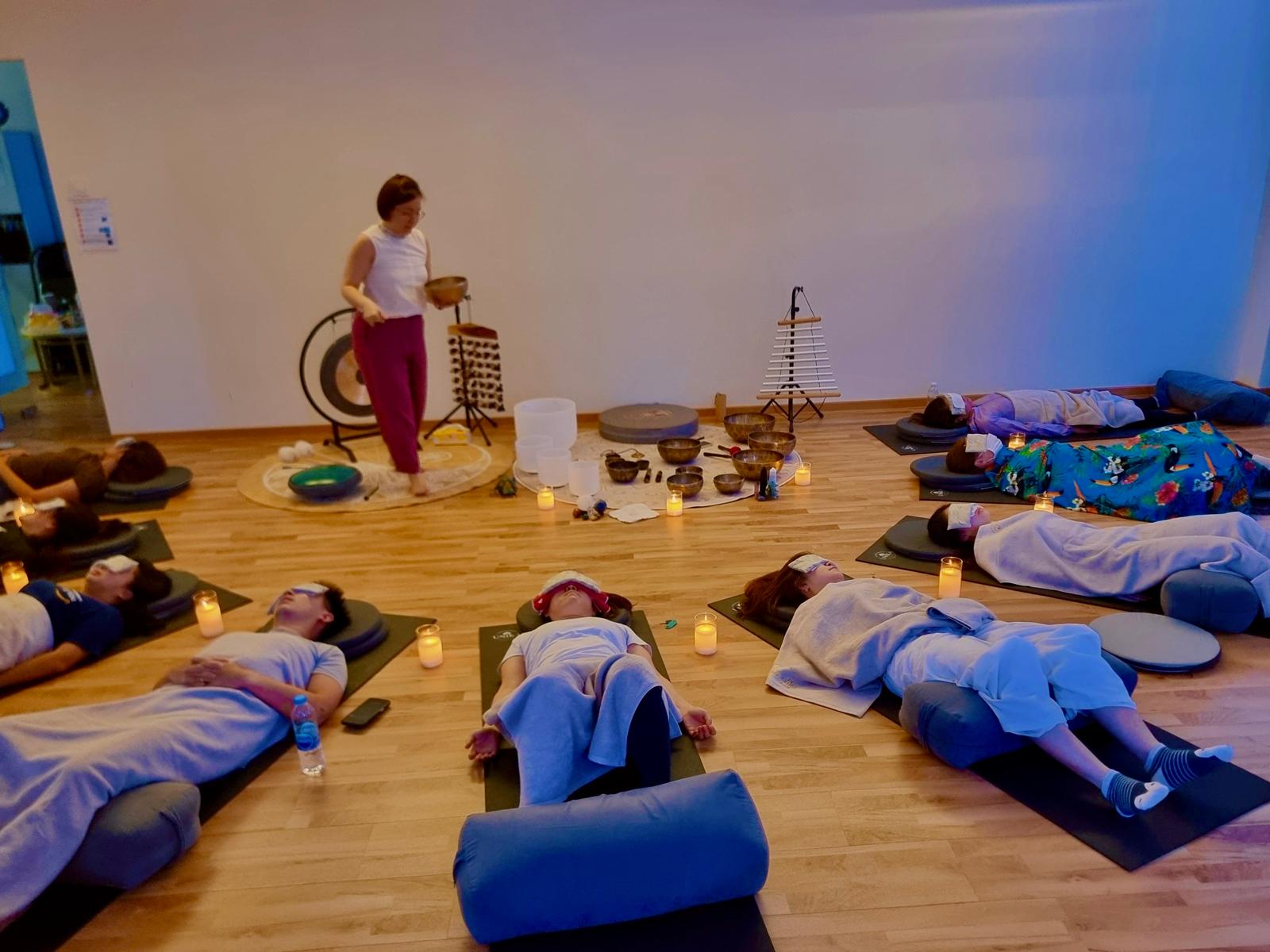
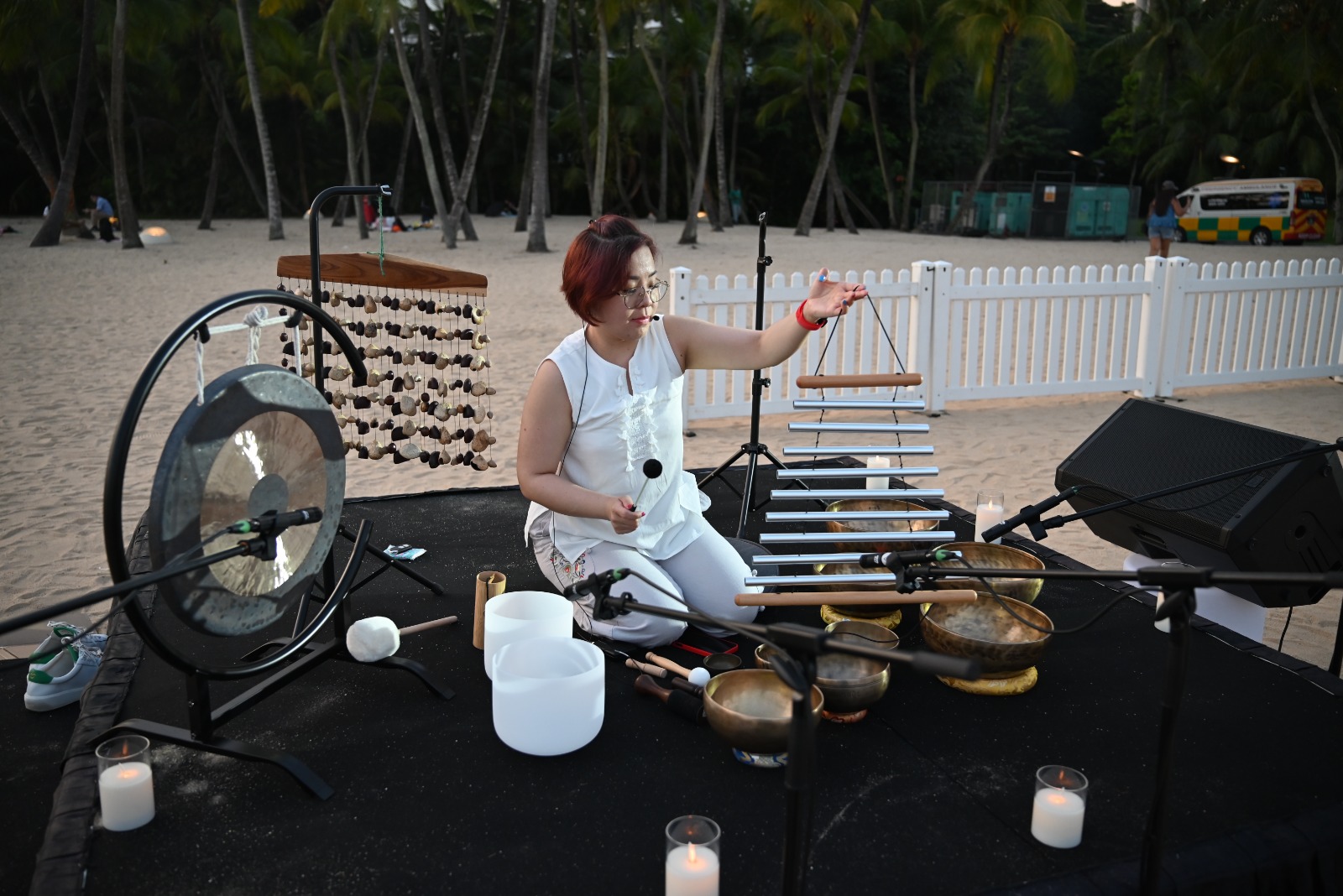
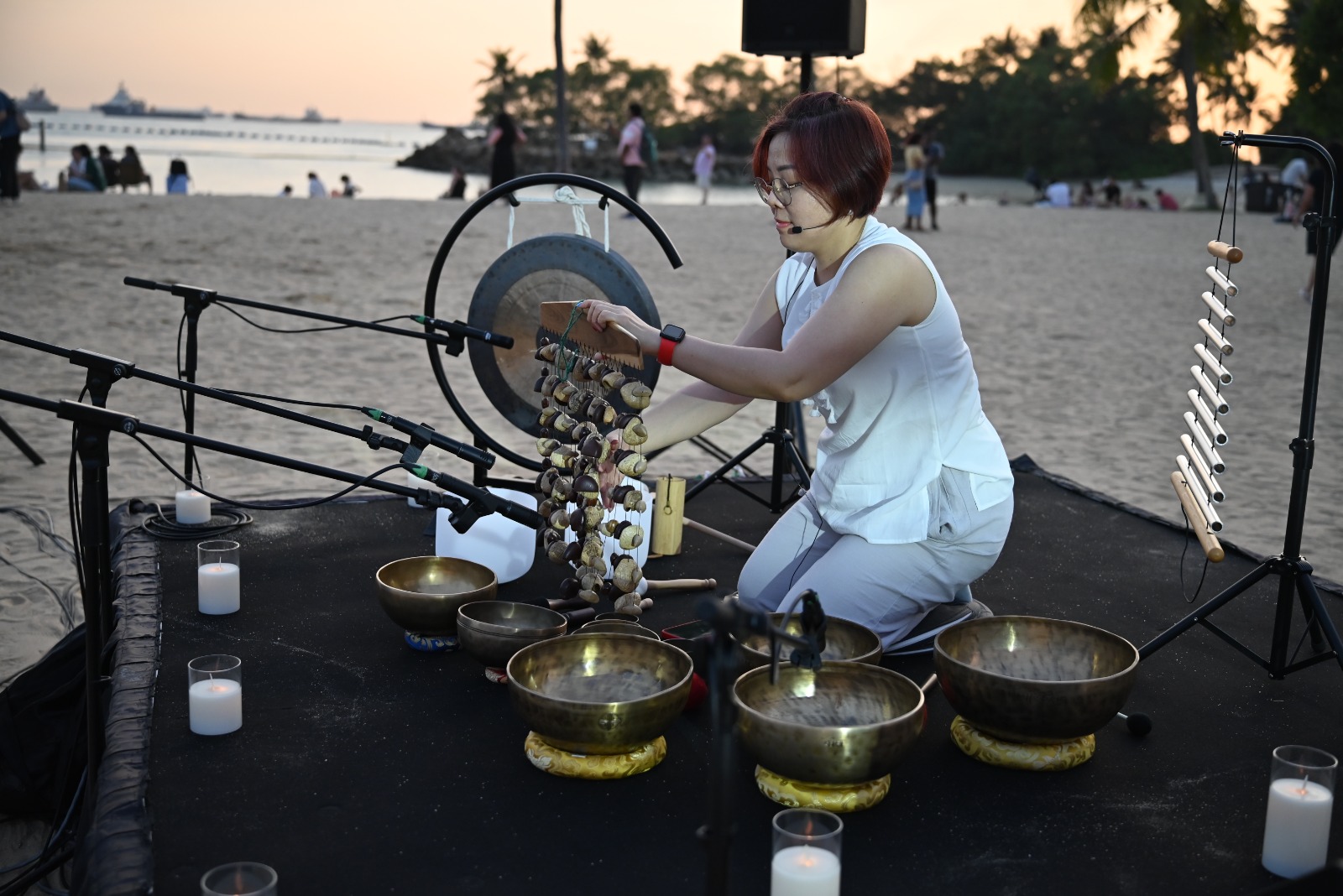
A sound bath is an immersive acoustic experience where you lie down in a quiet space while trained practitioners create a soundscape using instruments like:
- Tibetan singing bowls
- Crystal singing bowls
- Various Chimes
- Gongs
- Natural instruments (shakers, frame drum, etc.)
The key word is immersive. You’re not listening to music passively. The sound vibrations move through your entire body—you feel them in your chest, your bones, your cells. It’s a full-body experience, not just auditory.
Here’s what happens physiologically:
Sound frequencies trigger a parasympathetic shift. Certain frequencies (particularly those in the 40-80 Hz range) activate your vagus nerve, which is essentially the “off switch” for your stress response. Within minutes of sound bath exposure, measurable changes occur:
- Your heart rate slows
- Your blood pressure drops
- Your breathing deepens naturally
- Your muscle tension releases
- Your brainwave patterns shift from beta (thinking) toward alpha and theta (receptive, integrative states)
Unlike meditation—where you have to do the work of quieting your mind—sound bath does the work for you. The sound literally carries your nervous system into a different state.
Why Busy Professionals Need This
You might be thinking, “I could just meditate” or “I could take a nap.” And yes, those help. But there are specific reasons why sound bath is uniquely valuable for the modern professional:
1. It Doesn't Require Mental Effort
Meditation requires you to monitor your thoughts, redirect your mind, and “do it right.” If you’re already mentally exhausted, meditation can feel like one more task to fail at.
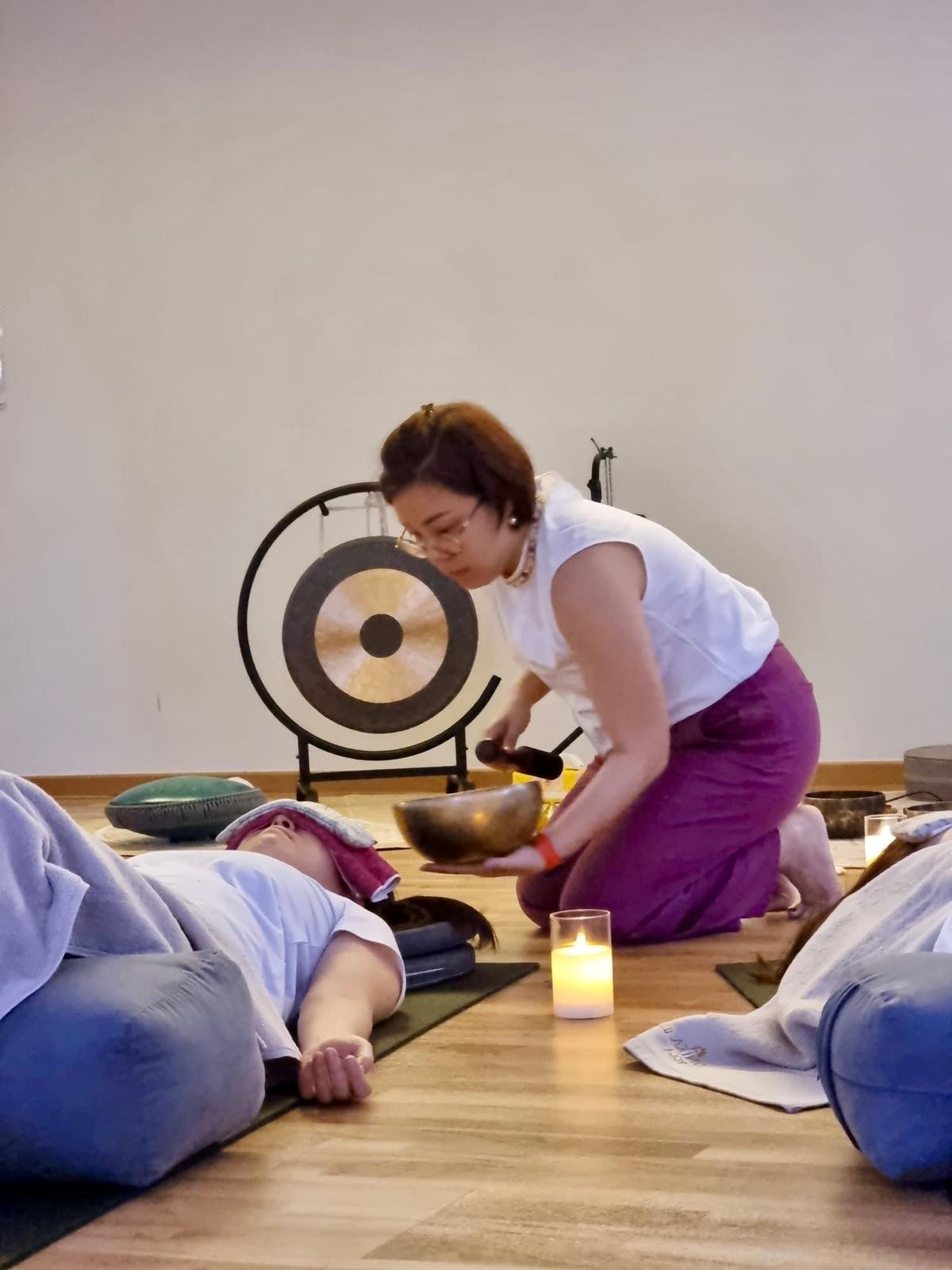
Sound bath is passive. You show up, lie down, and let the sound do the work. There’s no technique to master, no performance to achieve. This is surprisingly powerful for high-achievers who are used to optimizing everything.
2. It Creates Neurological Closure
One study from MIT found that multitasking creates “cognitive residue”—tasks you’ve switched away from keep running in your background processing, consuming mental energy. When you’re in a dedicated sound bath session, you physically cannot check your phone or respond to messages. This forces the neurological closure that professionals desperately need.
3. It Resets Your Baseline
When you live at high speed for months, your nervous system recalibrates. “Normal” becomes chronically activated. A one-hour sound bath doesn’t just feel good for that hour—it recalibrates your nervous system’s set point. Regular sessions train your body to relax more easily, to recover faster, to maintain baseline calm.
4. It's Efficient Recovery
You don’t have 8 hours for a weekend retreat. But you can carve out one hour a month. The ROI (return on investment) on sound bath is remarkable: one session often produces the recovery effects of an entire weekend away.
The Science of Slow: How Sound Bath Improves Professional Performance
This is the part that transforms sound bath from “nice wellness activity” to “strategic professional tool”:
Better Decision-Making: Stress narrows your thinking. When your nervous system is activated, you rely on pattern-matching and quick reflexes—useful for genuine emergencies, useless for complex problems. Regular parasympathetic activation expands your cognitive bandwidth. You see more options, consider second and third-order effects, and make decisions from your prefrontal cortex instead of your amygdala.
Enhanced Creativity: Your best ideas don’t come during the sprint. They come in the shower, on a walk, or when you’re not trying. This is called “diffuse-mode thinking,” and it requires a relaxed nervous system. Sound bath creates the neurological conditions where creative breakthroughs happen.
Improved Focus: Paradoxically, slowing down makes you more focused. When your nervous system isn’t in constant threat-detection mode, your prefrontal cortex—responsible for sustained attention and deep work—can actually function. Professionals often report that their most productive work weeks follow regular sound bath sessions.
Better Communication: When you’re stressed, you’re reactive. You interrupt, you misread social cues, you escalate conflicts. Regular parasympathetic activation teaches your nervous system that it’s safe to listen, to consider other perspectives, to respond thoughtfully. Your leadership effectiveness improves.
Resilience to Stress: Ironically, regular exposure to deep relaxation makes you more resilient to stress, not less. Your nervous system learns flexibility—you can activate when needed, but you can also return to baseline. This is the hallmark of a healthy stress response.
Sound Bath vs. Other Recovery Methods: Why It Works Better Than You'd Expect
- Vacation: A week-long vacation is wonderful, but the effects fade quickly. The Monday after vacation, you’re often back at baseline stress within hours. Sound bath’s benefits are cumulative—regular sessions create lasting nervous system recalibration.
- Meditation: Meditation works, but it requires discipline and mental effort—the exact things you’re depleted of. Sound bath removes the barrier.
- Exercise: Exercise is crucial, but it’s not inherently parasympathetic-activating. A high-intensity workout can actually keep your nervous system activated. Sound bath directly targets parasympathetic activation.
- Sleep: Sleep is non-negotiable, but it’s passive. You can’t schedule good sleep. Sound bath is an active parasympathetic practice you can schedule, and it improves your sleep as a secondary benefit.
The sweet spot: Sound bath is parasympathetic activation that’s effortless, immediate, and schedulable. It’s why forward-thinking professionals make it a non-negotiable part of their monthly rhythm.
How to Integrate Sound Bath Into Your Professional Life
You don’t need to overhaul your entire routine. Start small:
Month 1: Establish Baseline
Book one sound bath session. Notice how you feel for 3-5 days after. This gives you a concrete sense of the effect and helps you understand why you’d want to repeat it.
Month 2-3: Create Consistency
Once monthly sound bath becomes part of your rhythm. Mark it on your calendar like any other important appointment. Protect that time like you’d protect an important meeting—because it is one. It’s a meeting with yourself, it’s self care.
Month 4+: Deepen Practice
As you experience benefits, you might increase to twice monthly or explore different practitioners/venues. Some professionals coordinate with colleagues and create a “wellness group” that goes together.
Integration Tips:
Our group yoga classes allow you to:
- Mix both gentle and dynamic practices
- Attend classes across different days and times
- Build a sustainable and enjoyable yoga routine
With experienced teachers and a supportive environment, Unika Yoga & Therapy makes it easy to stay consistent with your yoga practice in Singapore.
Not sure which class is right for you? Our teachers are happy to guide you based on your health needs, experience level, and availability.
Who Can Benefit From Yoga Classes in Singapore?
- Schedule it strategically: Book it before or after a particularly demanding project period, not during peak stress
- Protect the transition: Don’t schedule meetings immediately after. Give yourself 15-30 minutes to return to normal functioning
- Notice the shifts: Keep a simple note of what changes—sleep quality, meeting clarity, mood, stress levels. Concrete evidence of ROI helps you stay consistent
- Make it non-negotiable: Frame it as professional development, not wellness luxury. Because it is—it’s investing in your most important asset(your cognitive performance)
The Professional's Competitive Advantage
Here’s what most high-achievers eventually realize: the people at the top don’t work harder. They work smarter. They’ve figured out the recovery practices that actually reset their nervous systems. They prioritize sleep, movement, and regular parasympathetic activation.
Sound bath has quietly become part of the toolkit for high-performing professionals in Singapore, especially in finance, tech, law, and consulting—fields where stress is chronic and performance is constantly measured.
You can see it as a luxury wellness activity. Or you can see it as what it actually is: strategic nervous system maintenance. The same way you wouldn’t ignore your car’s maintenance schedule, you can’t ignore your nervous system’s recovery needs.
The professionals who slow down intentionally are the ones who can genuinely speed up when needed. They have reserve capacity. They make better decisions. They show up as better leaders, partners, and human beings.
Your Invitation to Slow Down
If you’re a busy professional who’s been running on empty, sound bath offers something rare: permission and a pathway to genuinely rest. Not the kind of rest where you’re thinking about work. Not the kind where you’re forcing yourself to relax. But actual, effortless, nervous-system-level rest.
The pace of modern professional life isn’t changing. But your relationship with that pace can. And the shift often starts with one hour in a quiet room, surrounded by healing sound, finally letting your body remember what it feels like to slow down.
Ready to Experience Sound Bath?
At UNIKA Yoga, we specialize in sound bath experiences designed specifically for busy professionals. Whether you have one hour or need something that fits your calendar, we create a space where slowing down isn’t a luxury—it’s a practice.
Your nervous system is waiting for permission to rest. Give it that gift.