Yoga Teacher Training in Singapore: From Personal Practice to Confident Teaching
Your Journey Starts on the Mat—But Doesn't End There
You’ve been practising yoga for months, maybe even years. You’ve felt the physical changes, noticed greater mental calm, and experienced a deeper sense of self-awareness and inner balance. Now comes the question many dedicated practitioners ask: Should I teach?
Interestingly, not everyone who joins a yoga teacher training programme intends to become a yoga teacher. Many practitioners enrol to deepen their understanding of yoga, refine their practice, and explore the philosophy, anatomy, and therapeutic applications of yoga more comprehensively. Yet, through the journey, many discover a newfound confidence in sharing yoga with others.
If you’re looking at yoga teacher training in Singapore, you’re about to make one of the most meaningful decisions of your yoga journey. But there’s something important to know: becoming a yoga teacher isn’t just about mastering poses. It’s about transforming yourself into someone capable of guiding others through their own awakening on the mat.
At Unika Yoga & Therapy, we’ve guided hundreds of practitioners through this exact transformation. And we know the path is clearer when you understand what’s really involved.
Why Yoga Teacher Training Matters
Many people think yoga teaching begins and ends with knowing asanas. That’s the biggest misconception. Real yoga teacher training goes much deeper. It is not merely professional training; it is also a journey of self-discovery, self-discipline, and personal growth.
At Unika Yoga, we often say that yoga begins with the body, but it does not end there. The postures are important, yet they are only one part of a much larger system that includes breath, awareness, self-observation, ethics, meditation, and personal transformation. This understanding forms the foundation of our “Yoga Beyond Poses” philosophy.
When you enrol in a certified yoga teacher training programme, you’re not just learning to demonstrate poses. You’re studying:
Asana, Alignment & Adaptation: Beyond learning postures, you will understand their purpose, benefits, contraindications, modifications, and progressive variations. Rather than simply performing poses, you learn how to observe, analyse, and teach them safely to students with different abilities and needs.
Yoga Philosophy & History: Understanding the ancient roots of yoga helps ground your teaching in authenticity and deeper meaning. When teachers embody this understanding, their classes carry greater depth, authenticity, and purpose—qualities that students genuinely appreciate and connect with.
Functional Anatomy & Biomechanics: This is non-negotiable. Safe teaching means preventing injuries. You’ll learn how the human body moves, which variations are appropriate for different bodies and abilities, and how to correct alignment with confidence.
Pranayama & Breathwork: Breath is the bridge between body and mind. Teaching breathing techniques helps students manage stress, anxiety, and emotional challenges—turning yoga into a healing practice.
Teaching Methodology: How do you actually teach and how do you excel in teaching? What do you say? How do you sequence a class? How do you handle different students with different needs? What makes you an outstanding teacher that students will return to you? These are the practical skills that turn knowledge into impact.
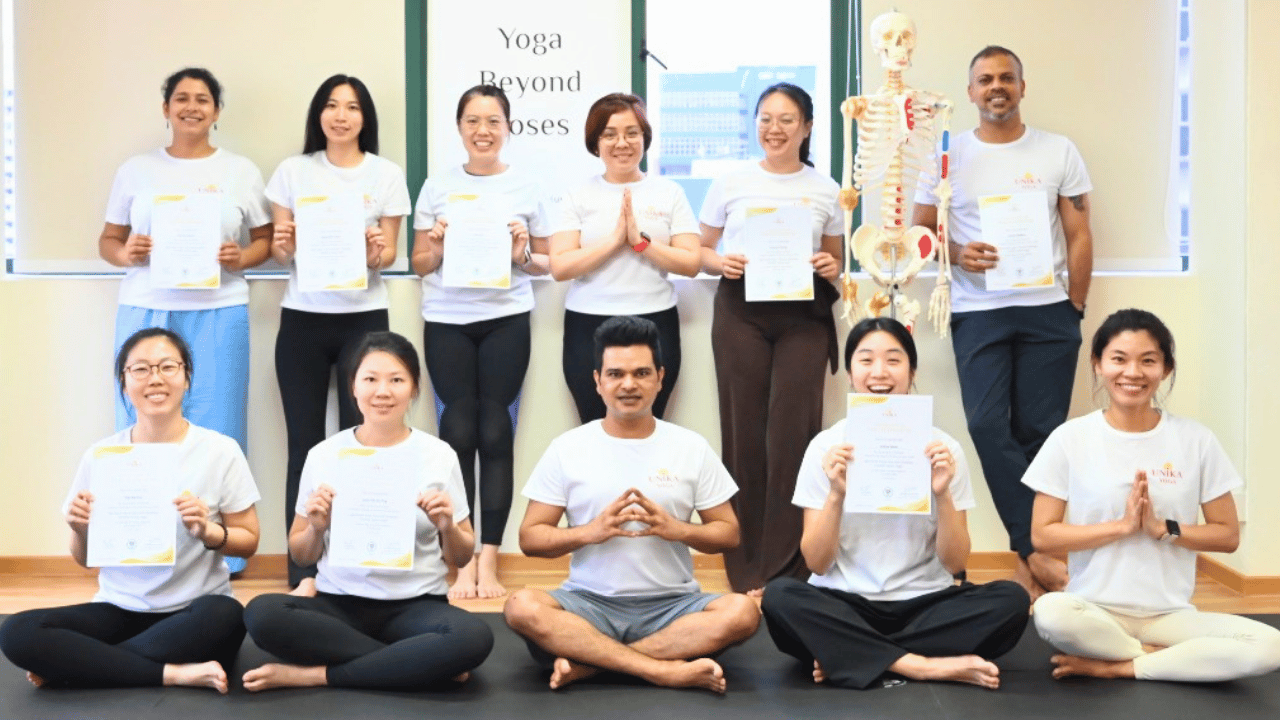
Practicum Experience: You’ll practise teaching with real feedback, learning directly from experienced teachers who have spent years refining their craft.
The RYT 200 Certification: Your Credential for Confidence
If you’re serious about yoga teaching, you need an internationally-recognised credential. The Registered Yoga Teacher (RYT 200) certification is the global standard.
An RYT 200 means you’ve completed 200 hours of structured training from a Registered Yoga School (RYS 200) certified by the Yoga Alliance. For students seeking a 200 Hour Yoga Teacher Training in Singapore, this internationally recognised qualification provides a strong foundation for both personal and professional growth. It’s recognised across studios, wellness centers, and yoga communities worldwide. Whether you teach in Singapore or move to another country, this credential opens doors.
What matters most is choosing an RYS 200 that delivers real depth. Not all training programmes are equal. Some focus on the physical practice. The best ones—the ones that truly transform teachers—focus on yoga as a complete discipline: body, mind, philosophy, and healing.
The Real Transformation: From Student to Teacher
There’s a beautiful shift that happens during yoga teacher training in Singapore.
In the beginning: You’re learning techniques. You’re mastering sequences. You’re understanding alignment cues. It feels like accumulating knowledge.
But around month three or four: Something changes. You begin observing your own movement patterns, breathing habits, emotional reactions, and thought processes with greater clarity. The practice gradually shifts from simply doing yoga to understanding yourself through yoga. You realise you’re not just learning yoga—you’re learning yourself. Your practice deepens in ways you didn’t expect. You start understanding why certain poses worked for you when you needed them most.
By month six or seven: You’re teaching classes (under supervision). And suddenly, it’s not about you anymore. You see your student struggling with a forward fold and you understand exactly what they need to hear. You see fear in someone’s eyes during their first backbend and you know exactly how to guide them through it safely.
This is the transformation that happens when you commit fully to yoga teacher training. You become a guide. You become someone others can trust with their bodies, minds, and healing.
What Happens After Certification?
Your training doesn’t end when you receive your certificate. That’s actually where your real teaching journey begins.
Many graduates continue with advanced training—like the 100-hour advanced yoga teacher training for those who want to specialise or deepen their expertise. Some pursue yoga therapy certification to work with specific health conditions. Others develop their own teaching style, building a personal brand and studio community.
The beauty of starting with a solid foundation is that you have options. You can teach group classes. You can offer private sessions. You can lead corporate wellness programmes. You can guide people through yoga therapy for stress, anxiety, or chronic pain. You can teach specialty styles like Yin yoga, Ashtanga, or Vinyasa.
The 200-hour training opens all these doors. But you choose which ones to walk through.
What To Look for in a Yoga Teacher Training School
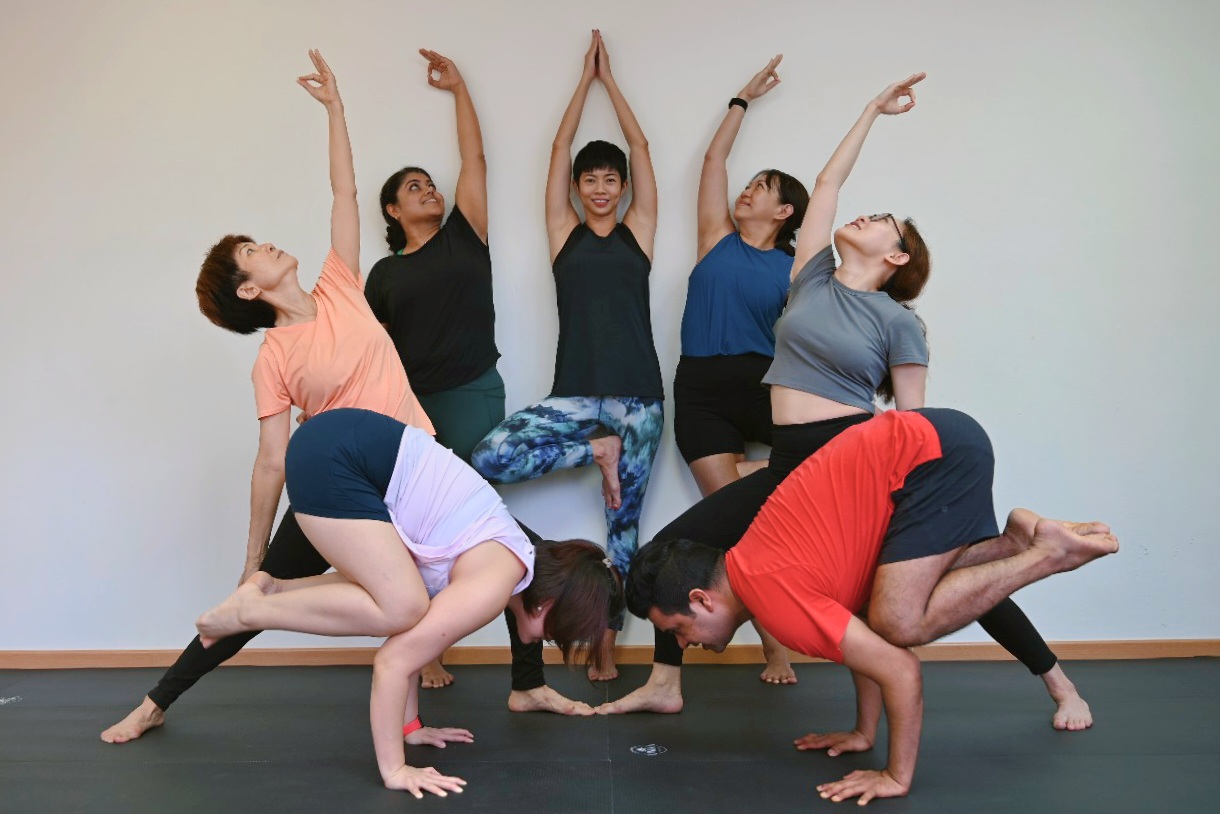
Not all training programmes deliver the same results. Before committing, consider these essentials:
Yoga Alliance Registration: This is non-negotiable. An RYS 200 school has met international standards for curriculum, contact hours, and instructor qualifications.
Experienced Lead Trainers: Your trainer/s should have deep knowledge across yoga philosophy, anatomy, alignment, and teaching methodology. Look for trainers with substantial teaching experience—not just years of personal practice, but actual teaching lineage.
Small Class Sizes: This allows personalised attention. You need feedback on your teaching. You need corrections on your alignment. You need someone to notice when you’re struggling and help you through it. Big groups don’t allow for this depth.
Holistic Curriculum: Quality yoga teacher training extends beyond physical practice, integrating philosophy, anatomy, breathwork, self-awareness, teaching methodology, and practicum experience.
Real Student Feedback: Look at testimonials from actual graduates. Are they teaching confidently? Did they feel supported? Would they recommend the programme?
Making the Decision: Is Yoga Teacher Training Right for You?
Here’s the honest truth: yoga teacher training is a journey of learning, self-discovery, and personal growth. It requires commitment, curiosity, and a willingness to deepen your understanding of yoga beyond the physical practice.
You should pursue yoga teacher training if:
- You’re genuinely passionate about yoga (not just fitness)
- You want to share yoga’s benefits with others
- You’re willing to deepen your own practice significantly
- You see teaching as a calling, not just a job
- You’re ready for a structured, intensive learning experience
You do not need to have all the answers before beginning. What matters most is a sincere willingness to learn, practise, and deepen your understanding of yoga. If you feel drawn to explore yoga beyond the physical practice, teacher training may be a meaningful next step in your journey.
Why Singapore is a Great Place to Begin Your Teaching Journey
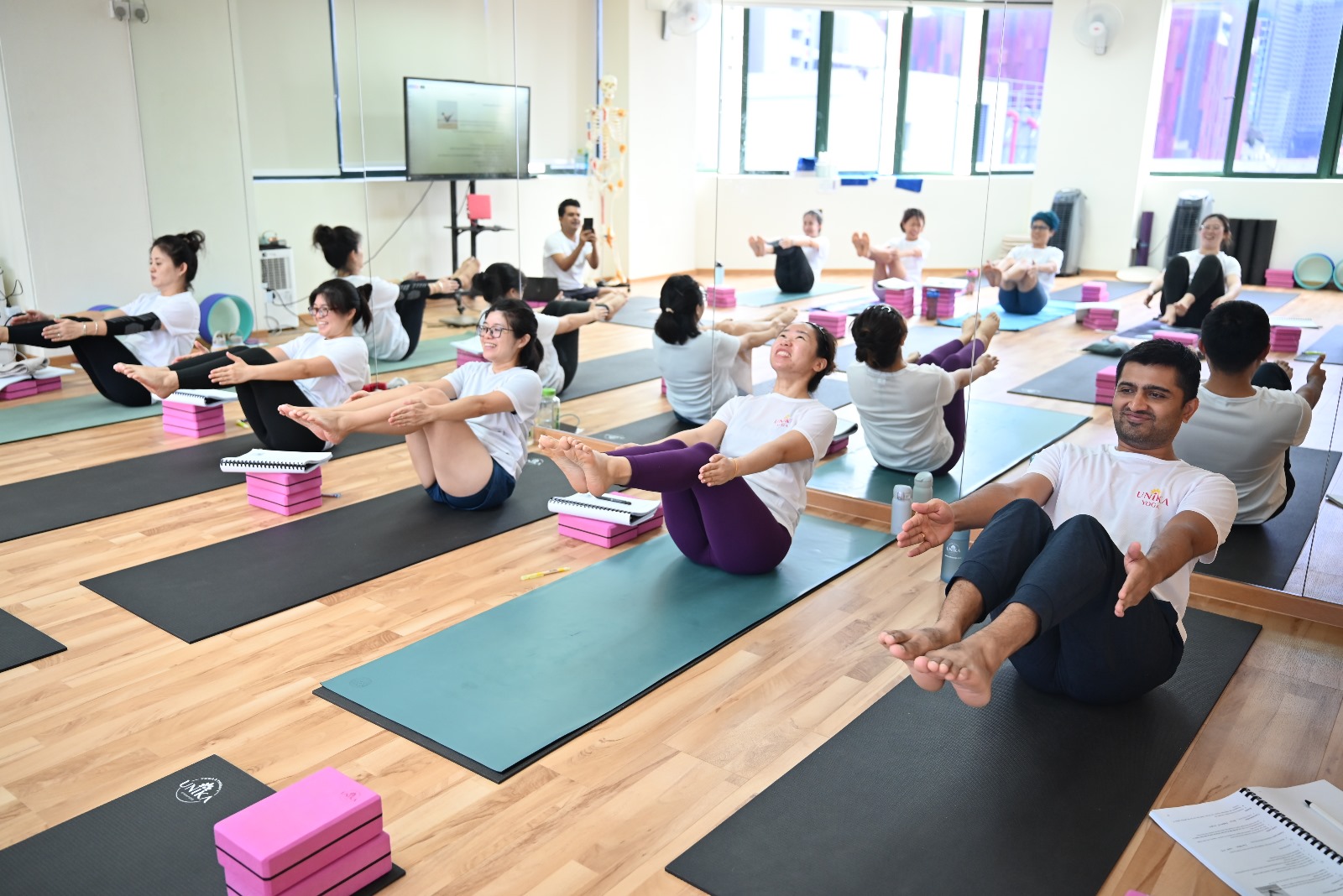
Singapore’s diverse wellness community, multicultural environment, and growing interest in holistic health provide an excellent environment for yoga teachers to develop their skills. From studio teaching and corporate wellness programmes to private sessions and therapeutic applications, there are many pathways for graduates to apply their training.
Your Confident Teaching Journey Starts Here
The path from personal practice to confident teaching is real. It’s transformative. It’s challenging. And it’s absolutely worth it.
When you step into your first class as a certified yoga teacher, you won’t just be demonstrating poses. You’ll be holding space for healing. You’ll be guiding people through their own journey of growth, awareness, and wellbeing. You’ll be sharing something you genuinely understand because you’ve lived it.
That confidence doesn’t come from knowing every pose. It comes from understanding why yoga matters. It comes from studying the philosophy. It comes from mastering your own practice. It comes from practising teaching with expert feedback until you know you can handle anything that shows up on your mat.
If you’re ready to transform your personal yoga practice into a teaching practice, the journey starts with one decision: enrolling in a yoga teacher training programme that honours the depth of this ancient discipline.
Teaching yoga is not about becoming an expert who has all the answers. It is about becoming a lifelong student who is willing to learn, practise, and guide others with sincerity and care.
If you feel called to deepen your understanding of yoga and share its benefits with others, yoga teacher training may be the natural next step in your journey.
Ready to Explore Your Path to Teaching?
At Unika Yoga & Therapy, we offer internationally accredited Yoga Alliance-certified yoga teacher training designed for practitioners like you. Our curriculum integrates in-depth asana practice, breathwork, meditation, yoga philosophy, anatomy, physiology, biomechanics and real teaching experience. We believe in yoga beyond poses—and we believe in preparing teachers who can hold that vision for their students too.
Whether you’re just beginning to consider teaching or you’re ready to commit fully, we’re here to guide you through every step of your transformation.
Your journey from student to teacher starts now.